


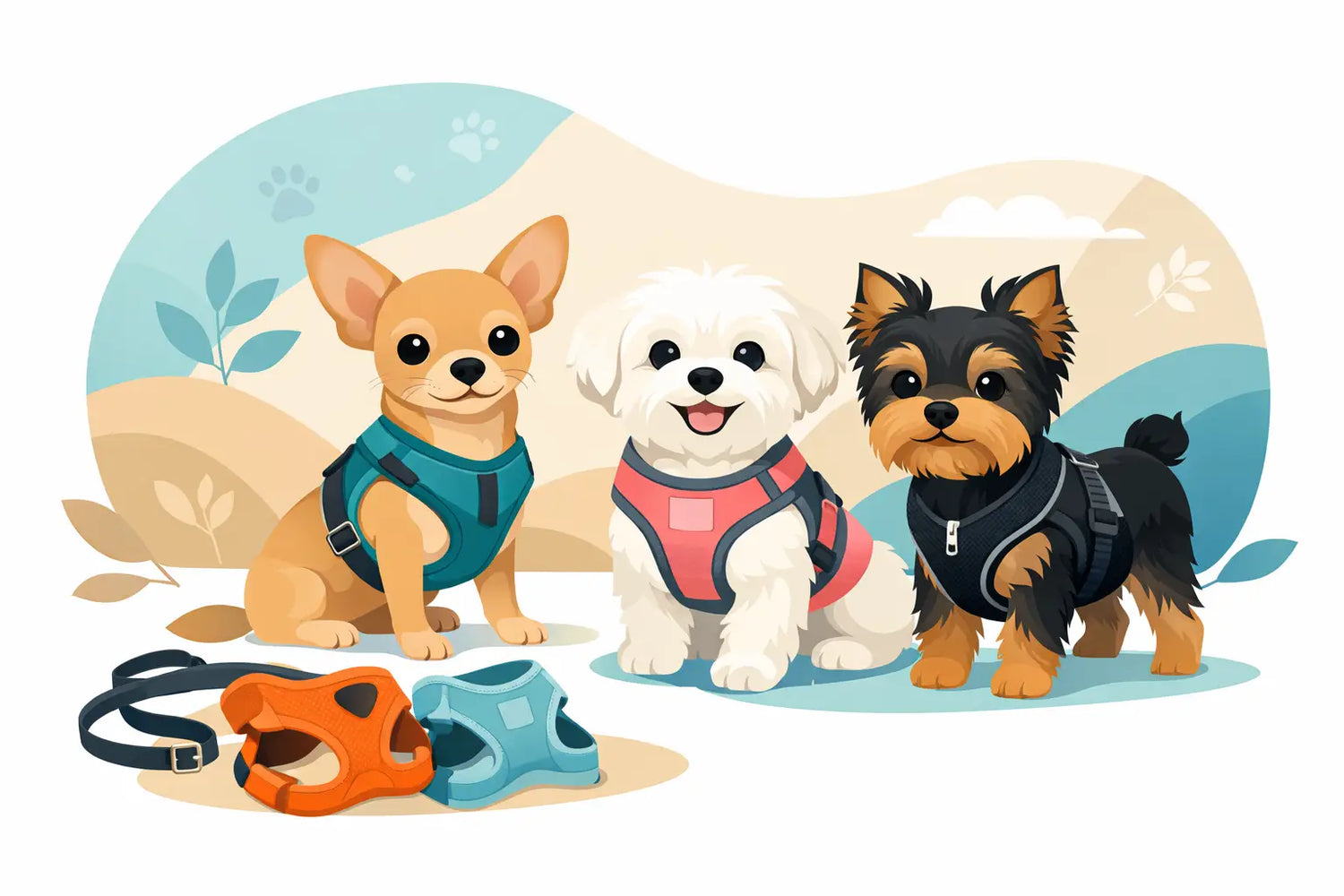
A tiny dog can make quite a big statement on a walk - especially when they are dressed beautifully and moving comfortably. But anyone who has shopped for comfortable harnesses for tiny dogs knows the challenge: what looks adorable on the hanger can gape at the chest, rub under the legs or feel far too bulky on a petite frame. For little dogs and young puppies, comfort is not a lovely extra. It is the whole point.
Small breeds have very specific needs. A harness that suits a sturdy cockapoo may overwhelm a Chihuahua, toy poodle or pom puppy. Tiny dogs often have finer bones, narrower shoulders and more delicate necks, so the right harness needs to feel secure without becoming restrictive. When the fit is right, walkies feel calmer, safer and much more stylish too.
Why comfortable harnesses for tiny dogs matter so much
With very small dogs, even minor design details make a noticeable difference. Thick edging, stiff webbing or oversized buckles can sit awkwardly against a little body. If a harness is too loose, your dog may wriggle free. If it is too tight, it can press into the chest or underarms and make movement feel choppy rather than natural.
Comfort also affects behaviour. A dog that freezes, scratches at the harness or resists being dressed is often telling you something useful. It does not always mean they dislike wearing a harness altogether. More often, it means the harness is rubbing, shifting or sitting in the wrong place. Tiny dogs need a gentler, lighter-touch design that supports them without fuss.
There is also the lead pressure to think about. A collar can place strain directly on the neck, which is not ideal for little dogs, especially those prone to delicate tracheas. A well-fitted harness helps spread pressure more evenly across the body. That does not mean every harness is automatically comfortable, of course. Shape and fit still matter enormously.
What to look for in a tiny dog harness
The best harness for a tiny dog usually feels surprisingly lightweight in the hand. Soft fabrics, smooth seams and a flexible structure tend to work better than anything rigid or heavily padded. Padding can sound appealing, but too much of it can swamp a very petite dog and create heat or bulk where none is needed.
A secure chest panel can be a lovely option for small breeds because it offers a softer feel across the front without digging in. Breathable materials are especially helpful for puppies, energetic little dogs and warmer days, while adjustable straps make it easier to fine-tune the fit as your dog grows or changes coat length through the seasons.
Fastenings matter more than many people expect. Tiny dogs do best with hardware that feels secure but not cumbersome. Large clips and chunky rings may be durable, yet they can look and feel oversized on a very small body. The goal is a harness that stays put without making your dog carry unnecessary weight.
Style comes into it as well, and quite rightly. If your dog is part of the family, their everyday pieces should feel special. A beautifully made harness in a coordinated set can bring together comfort and charm in a way that makes daily walkies feel a little more polished. Function should always come first, but there is no reason it cannot look lovely too.
Getting the fit right
Even the prettiest harness will disappoint if the sizing is off. Tiny dogs sit between measurements more often than larger breeds, which is why careful measuring is worth the extra minute. Chest girth is usually the most important starting point, and neck measurement can help refine the choice.
You want the harness to sit snugly without pinching. As a general feel, you should be able to slide a couple of fingers underneath, but not so easily that the whole piece shifts around. Watch where the harness sits near the front legs. If it cuts into the underarm area, it is likely to rub on longer walks. If it rides up towards the throat, the shape may not suit your dog.
Movement tells you a great deal. Once the harness is on, let your dog walk across the room. Their stride should look easy and natural. No hopping, no stiffness, no constant shaking off. A comfortable harness should almost disappear from their awareness after a few moments.
Puppies deserve a special mention here. If you are shopping for a very young dog, you need softness and adjustability, but also realism. They will grow. A little room for adjustment is useful, yet buying far too big in the hope they will grow into it can make those early walks uncomfortable and insecure.
Common mistakes when shopping for comfortable harnesses for tiny dogs
One of the biggest mistakes is choosing by breed label alone. Not every Yorkshire terrier is built the same way, and not every miniature dachshund has the same chest shape. Measurements and body shape are far more reliable than assumptions based on breed.
Another common issue is prioritising appearance over construction. A tiny floral print or elegant bow detail can be irresistible, and understandably so, but the base harness still needs to be well cut and kind against the skin. The best pieces manage both. They look boutique and feel beautifully wearable.
It is also easy to underestimate coat changes. A fluffy Pomeranian in winter may need a slightly different fit from the same dog after grooming. Likewise, a harness worn over a light jumper or under a waterproof coat may sit differently than it does on bare fur. This does not mean you need a wardrobe crisis before every walk, only that comfort should be checked in real life, not just at first try-on.
Harness styles and how they feel on tiny dogs
Soft vest-style harnesses are often popular for toy breeds because they provide gentle coverage and can feel cosy without being restrictive. They can be especially useful for dogs who dislike narrow straps. The trade-off is that some vest styles are warmer, so breathability matters.
Strap harnesses can be wonderfully light and less bulky, which suits some tiny dogs brilliantly. The catch is that poor strap placement becomes obvious very quickly on a petite frame. If the design sits too close to the legs or throat, comfort disappears fast.
Step-in harnesses can be convenient for dogs who dislike anything going over the head, though convenience should not be the only deciding factor. For some tiny dogs, a step-in design creates a secure, fuss-free dressing routine. For others, a better-shaped over-the-head harness may offer a more stable fit. It really does depend on your dog’s proportions and preferences.
For many small dog owners, the sweet spot is a soft, adjustable harness that balances support, lightness and style. That is where design-led dogwear shines. When a harness is carefully made for smaller breeds, it can feel elegant rather than merely functional.
Style and practicality can happily live together
There is a lingering idea that a comfortable harness must look plain or purely practical. Happily, that is not true. Tiny dogs are often the stars of the pavement, and there is something joyful about dressing them in pieces that feel considered, coordinated and genuinely comfortable.
A matching set can make everyday walkies feel effortlessly put together, especially if you enjoy pairing a harness with a lead, bow tie or bag holder in the same print. The key is making sure those stylish details sit on top of sound construction, not in place of it. Premium dogwear should never ask you to choose between comfort and charm.
That is part of what makes boutique collections so appealing. They feel curated, giftable and a little bit special, while still serving the very real needs of small dogs. At Paw Wraps, that balance between fashion and function is exactly what makes coordinated pieces so lovely for petite pups and their people.
When to rethink your current harness
If your dog starts resisting walkies, scratching more than usual or developing rubbed patches, it may be time for a closer look. Sometimes the problem is wear and tear rather than the original fit. Fabrics can stiffen over time, stitching can create rougher edges and repeated washing may change the feel of a once-soft harness.
You may also need a different harness for a different stage of life. A tiny puppy, a fully grown adult and an older little dog may not all be happiest in the same style. Senior dogs often appreciate softness and easy fastening, while young dogs may need more adjustability as they mature.
The nicest harness is the one your dog seems content to wear. Not the one with the loudest claims, and not necessarily the most expensive either. Comfort is visible. You see it in easy steps, relaxed posture and that cheerful little strut that says your dog feels good.
For tiny dogs, the best harness does more than look sweet in photos. It supports delicate bodies, makes daily routines easier and adds a touch of polish to the ordinary magic of going out together. When you find one that fits beautifully, feels soft and looks every bit as charming as your dog does, walkies become less of a hassle and more of a pleasure.



Leave a comment
This site is protected by hCaptcha and the hCaptcha Privacy Policy and Terms of Service apply.