


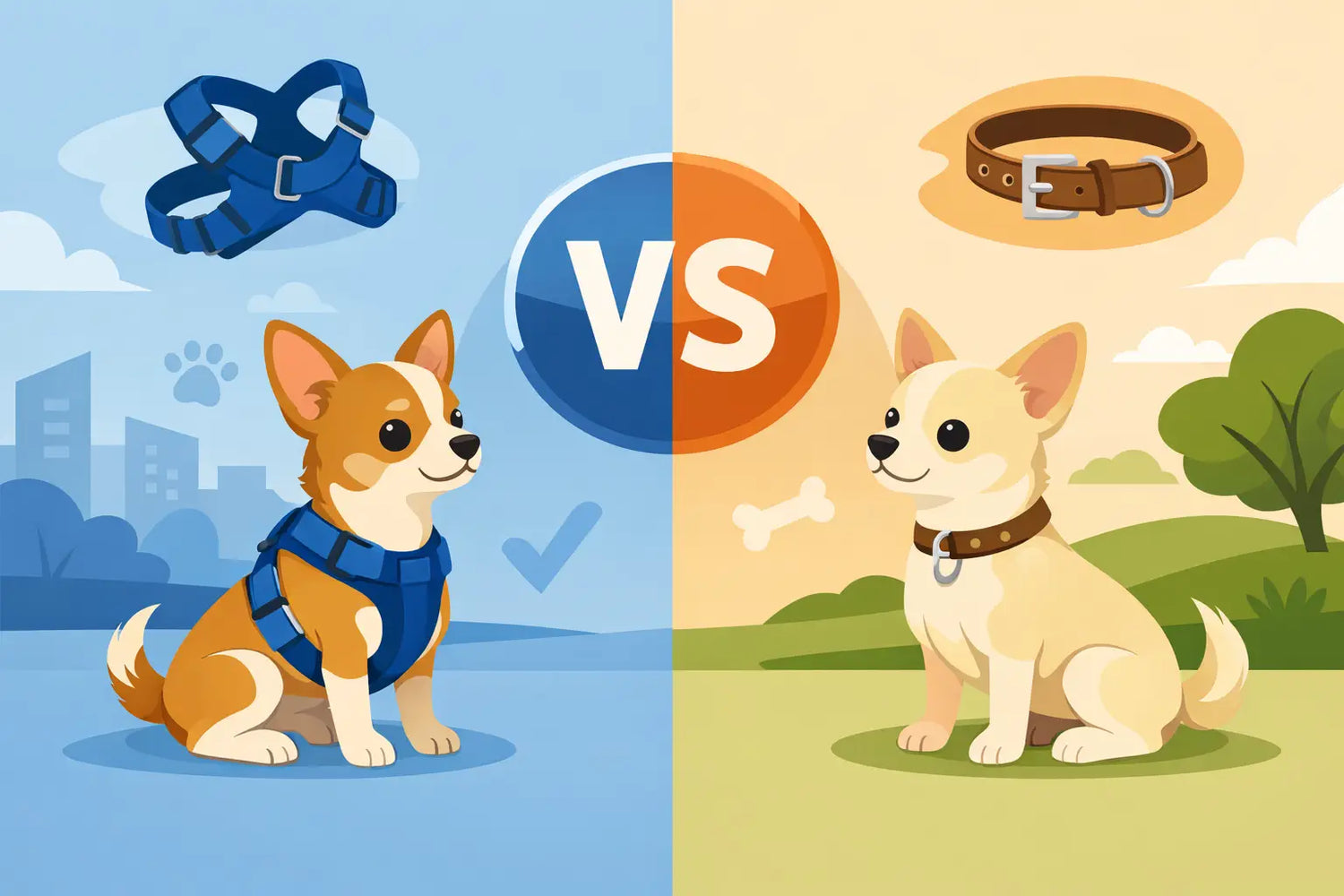
That tiny lead clip can make a surprisingly big difference to your dog’s walkies. For petite pups, a harness or collar comparison is not simply about choosing the prettiest print, although a coordinated look certainly makes every pavement strut more charming. It is about comfort, fit, behaviour and the kind of adventure you share together, from a quick garden break to a long weekend wander.
Small breeds and puppies can be especially sensitive to pressure around the neck, yet there are times when a well-fitted collar is the sensible choice. The loveliest answer is rarely one-size-fits-all. It depends on your dog’s shape, stage of life and walking habits.
Harness or collar comparison: the key difference
A collar sits around the neck and is ideal for carrying an identification tag. It is lightweight, familiar and wonderfully simple for dogs who walk calmly beside you without pulling. For many little dogs, a soft, adjustable collar is a comfortable everyday accessory, particularly at home or on short, relaxed outings.
A harness wraps around the chest and body, spreading the force of the lead over a broader area rather than concentrating it at the throat. This can make it a more reassuring option for puppies learning lead manners, eager little explorers and dogs with delicate necks or airways. A harness also gives you more control when your pup spots a squirrel, another dog or a particularly exciting leaf.
Neither choice is automatically better. Think of a collar as a smart everyday essential and a harness as the practical walking piece that may offer added support. Plenty of pet parents use both: a collar with ID for daily wear, then a harness for proper walkies.
Why many small dogs suit a harness
Toy and small breeds have plenty of personality packed into a compact frame. Some are gentle dawdlers, while others can produce an astonishingly enthusiastic burst towards a pigeon. If lead pressure is likely, a correctly fitted harness can feel kinder and more secure.
The main benefit is distribution. Instead of a sudden tug being felt at the neck, pressure is shared through the chest and shoulders. This is particularly worth considering for puppies, who are still learning that the lead is not an invitation to sprint ahead, and for flat-faced breeds that may be more vulnerable to breathing discomfort.
A harness can also be helpful for dogs who have slipped a collar in the past. However, it must fit properly to do its job. A loose harness can twist, rub or create an escape route for a determined little wriggler. One that is too tight can restrict movement and turn a lovely outing into an uncomfortable one.
Look for adjustable points and a shape that sits clear of the throat. Your dog should be able to walk, sit and sniff naturally, with no chafing behind the front legs. As a simple guide, you should be able to slide two fingers beneath the straps, though fingers are not a substitute for watching how your individual dog moves.
When a collar may be the better choice
Collars deserve their place in a stylish small-dog wardrobe. A beautifully fitted collar is wonderfully easy for popping on before a brief toilet trip, for wearing an ID tag and for adding a finishing touch to a matching lead, sailor bow tie or collar flower.
For a dog who does not pull and has no known neck or respiratory concerns, a collar can be perfectly suitable for calm, short lead walks. Some dogs also prefer the lighter feel of a collar, especially when they are relaxing at home. The key is never to use it as a shortcut for managing pulling. Repeated strain against a collar is uncomfortable for any dog, whatever their size.
Choose a collar that is proportionate to your pup. Very narrow collars can put pressure on a small area, while overly wide or heavy styles may feel bulky on a tiny neck. Check the fit regularly, especially for puppies. Their growth spurts have a habit of arriving just after you have found the perfect setting.
If your dog coughs, gags, wheezes, scratches at their neck, pulls constantly or seems reluctant to walk, pause and reassess. A vet or qualified behaviour professional can help you rule out health concerns and find a safer approach to lead training.
Fit matters more than the fastening
The most fashionable harness in the world will not feel special if it pinches, rubs or rides up. Before heading out, let your dog wear a new harness indoors for a few short, happy sessions. Pair it with treats, praise and a little play so it becomes part of a cheerful routine rather than a signal that something strange is about to happen.
Check that the chest section rests comfortably, the straps do not press into the armpits and the lead attachment sits where it is designed to sit. A harness should not rotate dramatically to one side when your dog walks. With a collar, make sure it cannot slip over the head but is not tight enough to rub or restrict swallowing.
Do a quick check before every outing, particularly after your dog has been groomed, gained or lost weight, or had a particularly muddy adventure. Damp, dirty fabric can irritate the skin, so keep walking gear clean and dry according to its care instructions.
Style should still feel practical
Matching accessories are not frivolous when they help make the daily routine feel joyful. A coordinated harness, lead and walking bag can turn even a drizzly Tuesday stroll into a little occasion. More importantly, choosing pieces you genuinely love often means you are more likely to reach for the right equipment every time.
At Paw Wraps, seasonal collections are designed for pet parents who want that ready-to-wear look without forgetting the real purpose of dogwear: comfort for the dog and ease for the person holding the lead. A playful print can sit beautifully alongside sensible details such as adjustability, secure fittings and a lead that is comfortable in your hand.
Consider your usual route when selecting your set. A lightweight collar may be all you need for a quiet village lane with a settled adult dog. A secure harness and matching lead may make more sense for busy pavements, puppy socialisation or a little dog with a big opinion about where the walk should go.
A simple choice for different walkies
For most small-dog households, the most flexible arrangement is not harness versus collar but harness plus collar. Keep an ID tag on a comfortable collar, then attach the lead to a fitted harness for walks where excitement, traffic or pulling are likely. This gives you a polished everyday look and a practical option for busier moments.
A young puppy will often benefit from gentle harness training early on, with sessions kept short and positive. An older dog who strolls politely may be content with either option, provided it fits well and has been chosen with their health and habits in mind. Dogs recovering from injury, showing breathing changes or experiencing pain should be assessed by a vet before changing their walking equipment.
Your dog cannot tell you that a strap is rubbing or a collar feels heavy, but their body language will. Watch for the happy signs: a relaxed gait, easy sniffing, bright interest and that cheerful little trot when they realise walkies are happening. Choose the piece that lets them move comfortably, then enjoy adding the finishing touches that make them feel every bit as adored as they are.



Leave a comment
This site is protected by hCaptcha and the hCaptcha Privacy Policy and Terms of Service apply.