


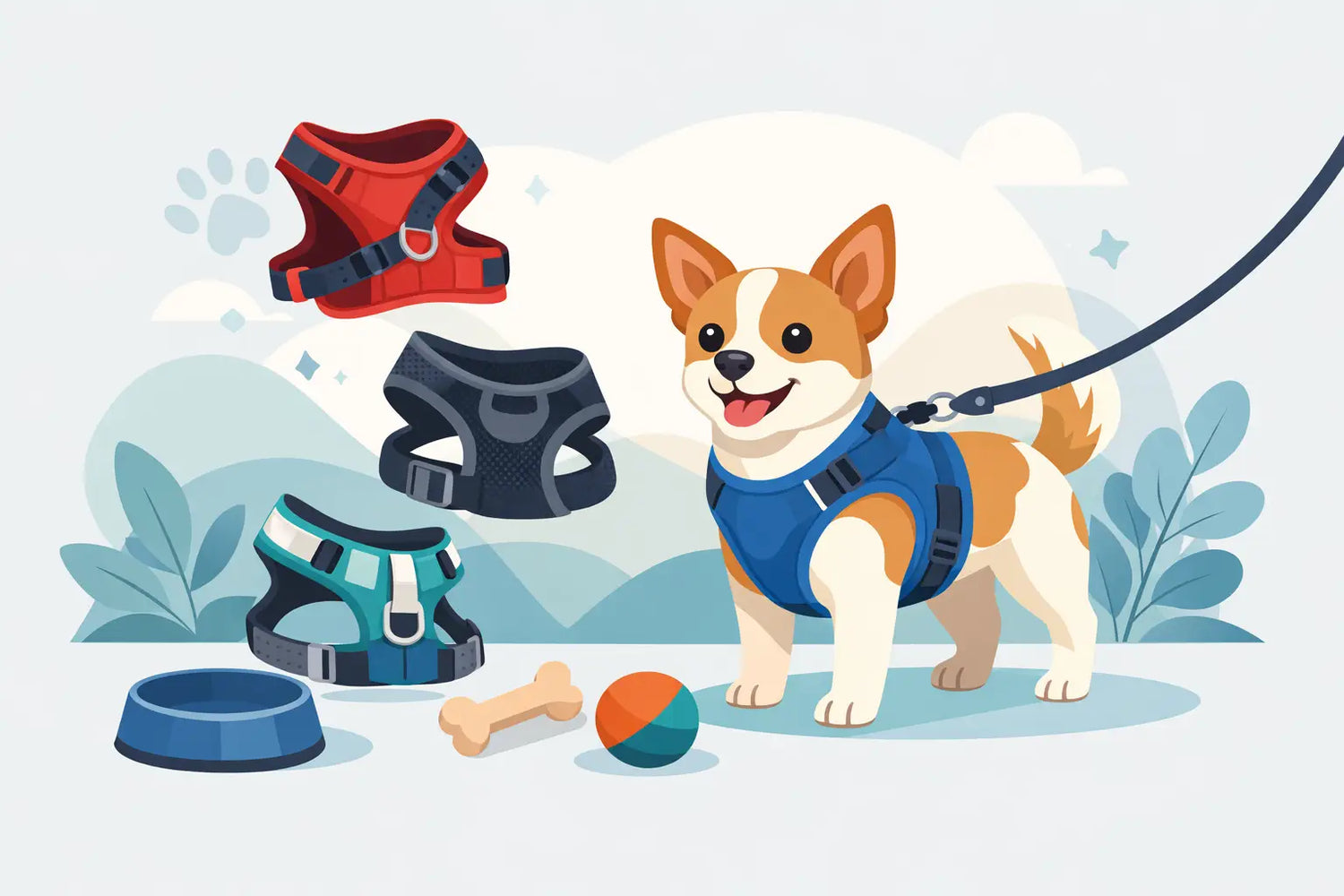
A small dog can tell you exactly how they feel about a bad harness without saying a word. The shuffle. The freeze. The little sideways wriggle at the front door. If you have ever wondered what is the best harness for a small dog, the answer usually starts with this: the best one is the harness your dog barely notices wearing, because it fits beautifully, feels soft, and stays secure on every walk.
For tiny breeds and puppies, harness choice matters more than many owners realise. Small dogs have delicate frames, finer necks, lighter shoulders and, in some cases, wonderfully dramatic opinions. A harness that works perfectly for a larger dog can rub, gape or feel bulky on a Chihuahua, Pomeranian, Yorkie, Maltipoo or Dachshund. That is why the right design is not just about looking lovely on walkies, although we are very much in favour of a polished little outfit. It is about comfort, control and confidence for both of you.
What is the best harness for a small dog really based on?
There is no single harness that suits every small breed. A snug little pug, a fine-boned Italian Greyhound and a fluffy toy poodle all have very different shapes. The best harness depends on your dog’s chest size, coat, walking style and stage of life.
In most cases, a lightweight adjustable harness is the safest and most comfortable choice for a small dog. It should sit neatly around the chest rather than pressing on the throat, and it should feel secure without being stiff. Adjustable points matter because small dogs often fall between sizes, especially puppies and daintier breeds. Soft, breathable materials are also key, as heavy webbing or rough edges can quickly become irritating on a tiny body.
A good small dog harness should do three jobs at once. It should distribute pressure more evenly than a collar alone, give you gentle control, and allow your dog to move naturally. If one of those pieces is missing, it is probably not the right one.
The features that matter most
Fit comes first, always. You should be able to fit two fingers between the harness and your dog’s body, but no more than that. Too tight, and it can chafe under the legs or across the chest. Too loose, and your little escape artist may reverse straight out of it.
For small breeds, adjustability makes a noticeable difference. A harness with adjustable neck and chest straps gives you a more tailored fit, which is especially helpful if your dog has a broad chest, a narrow waist or a growing puppy shape. Step-in designs can work well for some dogs, particularly those who dislike anything going over the head, but they still need to sit close and secure.
Softness is another big one. Tiny dogs are close to the ground, so their harnesses meet more movement, more fluff, and often a bit more weather. Padded edges, breathable fabric and smooth seams help prevent rubbing. If your dog has a long or silky coat, look for a harness that will not mat the fur under the arms or flatten the chest too heavily.
Then there is weight. A harness might look adorable, but if it feels chunky on a 2.5kg dog, it is not the one. Small dogs need something light enough to wear comfortably for everyday outings, from quick garden trips to café strolls and weekend wanderings.
Best harness styles for small dogs
The most popular option for little dogs is usually a vest-style or Y-shaped harness. Both can be excellent, but they suit different needs.
A vest-style harness often feels soft and cosy, which makes it a lovely choice for puppies or dogs who are nervous about getting dressed. It can offer a close, secure fit and often looks especially smart as part of a coordinated walking set. The trade-off is that some vest styles can feel warm in hotter weather, and some are less adjustable than strap-based designs.
A Y-shaped harness is often preferred for active small dogs because it allows freer shoulder movement. If your dog enjoys longer walks, trots with purpose or pulls a bit when excited, this shape can be more comfortable. The important detail is that the front of the Y should sit on the chest, not creep up onto the throat.
Step-in harnesses are useful for dogs who dislike having anything slipped over their head. They can be quick and fuss-free, which busy puppy owners tend to appreciate. The downside is that fit can be less forgiving if the sizing is not spot on.
No-pull harnesses are sometimes recommended for dogs that tug, but with very small breeds, you need to be careful. Some front-clip styles can help redirect pulling, but anything too restrictive or heavy can affect natural movement. For many tiny dogs, lead training and a well-fitted lightweight harness work better together than a heavily corrective design.
How to choose the right harness for your dog’s shape
Breed does matter here, even among small dogs. A French Bulldog or pug may need more room in the chest and less bulk around the neck. A Dachshund needs a harness that accommodates a longer body without digging behind the front legs. A pomeranian or shih tzu may need something that works with a fuller coat rather than against it.
Puppies are their own category. The best harness for a puppy should be adjustable, easy to put on, and soft enough for short early adventures. There is no point choosing something overly structured when they are still growing every few weeks. It is much better to focus on comfort, simple fastening and room for gentle adjustment.
If your dog is between sizes, size up only if the harness has enough adjustability to bring it in properly. Otherwise, the smaller size is usually safer, provided it does not pinch. Measuring carefully around the chest, and checking the neck area too, will save a lot of guesswork.
Style matters too, and that is not frivolous
Small dog owners often get told to focus on function and forget the rest. We disagree. When pets are family, choosing pieces that feel special is part of the joy.
The best harness for a small dog should be practical, yes, but it can also be beautifully made, flattering on your pup, and part of a coordinated everyday routine. A matching lead, collar accessory or walking bag does not make the harness less useful. If anything, it makes getting out the door feel more considered and enjoyable.
For many owners, style is also tied to quality. A thoughtfully designed harness set often signals better finishing, better materials and more attention to fit. Of course, pretty on its own is not enough. If a harness slides, rubs or twists, the print cannot save it. But when style and function meet, that is the sweet spot.
Signs your current harness is not the best one
Sometimes the wrong harness is obvious. Your dog scratches at it constantly, refuses to walk, or slips out of it. Other times, the clues are subtler.
If the harness rotates to one side, it may be too loose or the wrong shape. If you notice flattened fur, redness under the legs or pressure near the throat, it is likely not fitting correctly. If your dog walks with shorter steps or seems reluctant after a few minutes, the design may be limiting shoulder movement.
Small dogs can also be very expressive about texture. Some dislike stiff straps, noisy buckles or thick padding. If your dog seems unsettled as soon as the harness goes on, pay attention. The best fit should look secure and feel easy.
What pet parents should look for when shopping
Think about your real routine, not just the photo moment. Do you need something quick for nursery runs and local walkies? Something polished for weekends out? Something light for summer and easy to layer over a knit or coat in colder weather?
A premium harness for a small dog should feel dependable every day. Look for secure fastenings, quality stitching, washable materials and a shape that complements your dog’s build. If you love a coordinated look, matching sets are a lovely way to bring function and style together without making your dog wear anything fussy.
This is where a boutique approach can make all the difference. Rather than choosing from endless generic options, it helps to focus on well-designed pieces created with small dogs in mind. At Paw Wraps, that balance of comfort, charm and elevated everyday style is exactly what makes a harness feel like more than just another pet accessory.
So, what is the best harness for a small dog?
For most little dogs, the best harness is lightweight, adjustable, soft against the coat, secure enough to prevent slipping, and stylish enough to feel like a treat for both of you. The exact shape may vary depending on your dog’s body and personality, but comfort and fit should always lead the decision.
If your dog walks happily, moves freely, stays secure, and looks wonderfully put together while doing it, you are on the right track. The loveliest harness is not the one with the most features. It is the one that turns walkies into an easy, comfortable part of your day - with a little extra charm every time you clip on the lead.

Leave a comment
This site is protected by hCaptcha and the hCaptcha Privacy Policy and Terms of Service apply.