


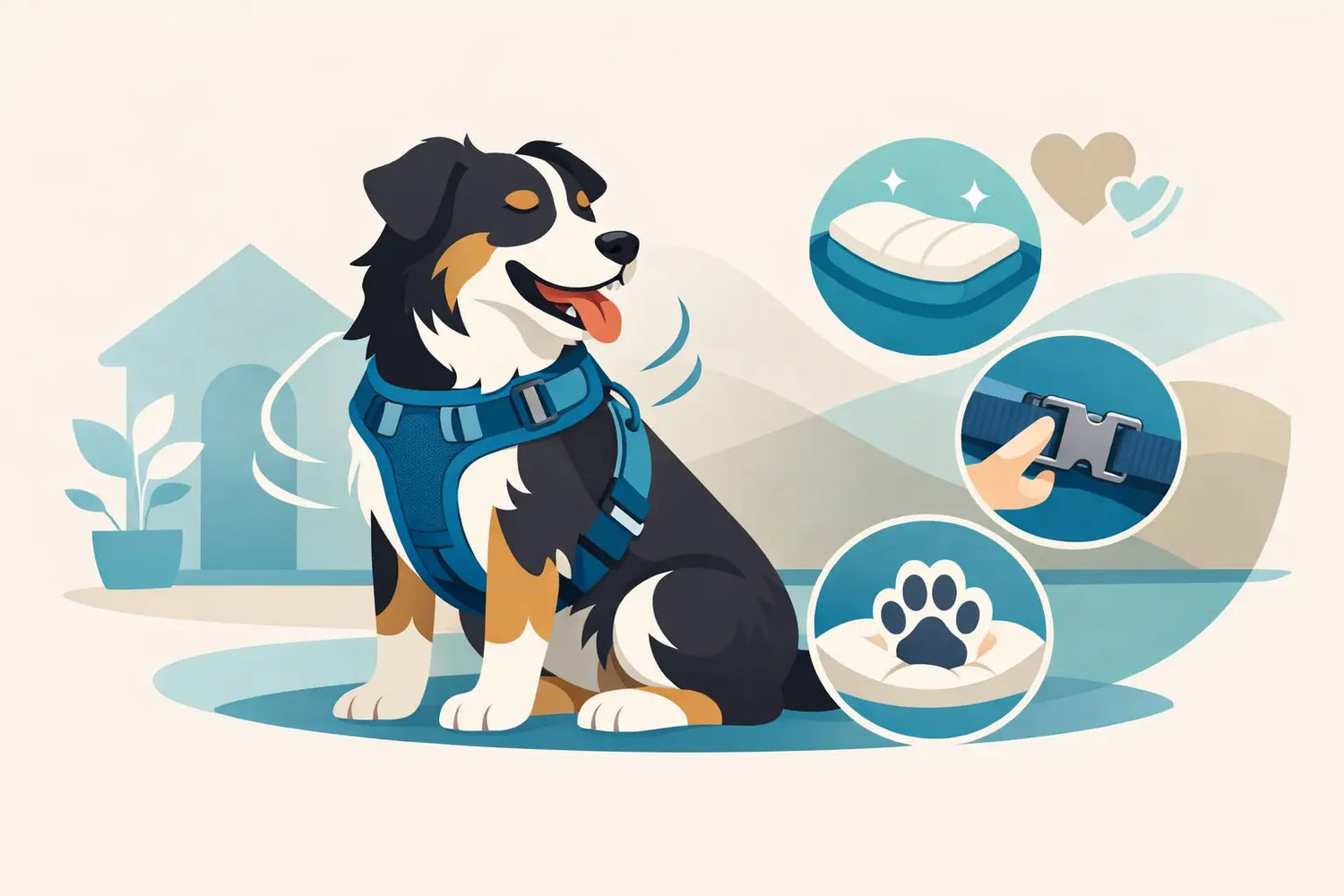
A harness can look utterly adorable with a matching lead and little collar bow, but the real test comes when your pup takes their first few steps. What makes a dog harness comfortable is not simply soft fabric or pretty print. It is the way the harness sits on their small frame, moves with their body and lets them sniff, trot and explore without rubbing, pinching or pulling in the wrong places.
For toy breeds and puppies especially, comfort is a daily essential. Their proportions can change quickly, their coats can be delicate and their confidence on walkies is still growing. A well-chosen harness should feel like a gentle, secure hug - not something they are desperate to wriggle out of.
What Makes a Dog Harness Comfortable?
A comfortable harness spreads pressure across the chest and body rather than concentrating it around the neck. It should be light enough that a little dog barely notices it, while still feeling secure when they pause to investigate a leaf, greet a neighbour or get a burst of zoomie energy.
Fit, shape, fabric and adjustment all matter equally. A harness can be beautifully padded, for example, but still be uncomfortable if the chest panel is too narrow or the straps sit behind the front legs. Likewise, a roomy harness may not rub, but it can leave a dog feeling unstable or give them too much opportunity to reverse out of it.
The goal is a design that stays in the right place while allowing natural movement. Think polished, practical and ready for every charming photo opportunity along the way.
A Fit That Is Snug, Not Restrictive
The most comfortable harness is fitted to the dog in front of you, not just the size printed on a label. Small breeds vary enormously in chest shape, back length and coat thickness. A compact Pomeranian, a fine-boned Chihuahua and a fluffy Cavapoo puppy may all need very different adjustments, even if their measurements appear similar.
Start by measuring around the widest part of your dog's chest, usually just behind the front legs. Check the brand's size guide, then adjust the harness once it is on. You should generally be able to slide two fingers beneath the straps. If you can fit more than that, it may shift and chafe. If you cannot comfortably fit two fingers, it may restrict breathing and movement.
Pay particular attention to the area behind the front legs. This is where repetitive rubbing often starts, particularly on longer walks or when a dog is excitedly pulling towards something interesting. The harness should sit clear of the armpits rather than cutting into them with every stride.
A good fit also means the chest section remains centred. If it twists to one side after a few steps, the harness may be too loose, unevenly adjusted or simply the wrong shape for your dog.
Leave room for growing puppies
Puppies need their harness fit checked frequently. A harness that fitted perfectly a fortnight ago can become uncomfortably tight surprisingly fast. Adjustability is helpful during this stage, but it is not a reason to keep a clearly outgrown harness in use.
Watch for changed behaviour too. Reluctance to put the harness on, scratching at the straps, stopping on walks or an unusual gait can all be clues that it no longer feels right. A puppy who is learning to love walkies deserves a harness that supports that happy association.
The Right Shape Protects the Neck and Shoulders
Harness shape makes a noticeable difference to everyday comfort. A well-designed chest-led style directs pressure away from the throat, which can be especially reassuring for small dogs that are enthusiastic on the lead. Instead of a sudden tug being felt at the neck, the force is distributed across the stronger chest area.
Look for a chest panel that lies flat without bunching. It should not ride high into the throat when your dog moves forward, nor should it hang so low that it affects the natural swing of their front legs. Your dog should be able to lower their head for a proper sniff and take a full stride without the harness shifting awkwardly.
There is a trade-off here: more coverage can offer more support, but an overly bulky design may feel warm or cumbersome on a tiny dog. Fine, lightweight materials and thoughtfully placed panels often provide the sweet spot. For a petite pup, less bulk can mean more freedom.
Soft, Breathable Materials Matter
A comfortable harness needs to feel lovely against the coat and skin. Soft edging, smooth webbing and breathable fabric help reduce friction, especially for dogs with fine fur or sensitive skin. Gentle padding can add welcome cushioning across the chest, but it should not make the harness stiff or trap excessive heat.
Consider the season and your usual walking routine. A breathable harness is particularly useful in warmer weather and for lively dogs that soon warm up on a brisk walk. In cooler months, check that the harness still sits comfortably over a jumper or beneath a coat. Layering can change the fit, so do not assume the same strap setting will work all year round.
For dogs with fluffy coats, take a moment to smooth fur away from the buckles and straps as you put the harness on. Trapped hair can cause a little pinch that becomes surprisingly irritating over time. For short-coated dogs, soft seams become even more valuable because there is less fur between the material and the skin.
Secure Fastenings Build Confidence
Comfort is emotional as well as physical. Dogs settle better when their harness feels predictable and secure. A design that is easy to put on calmly, with sturdy fastenings and adjustable straps, can make the getting-ready routine far more pleasant for everyone.
Check buckles and adjusters before each outing, particularly if your dog is a determined little explorer. They should sit flat, away from areas that bend and rub, and remain secure without digging into the body. Make sure the lead attachment point feels strong and is positioned so that the lead does not constantly brush against your dog's legs or back.
Never rely on a harness alone to solve pulling. Even the comfiest style can become uncomfortable if a dog repeatedly reaches the end of the lead at speed. A little loose-lead practice, plenty of pauses and rewards for walking alongside you will make walkies kinder on their body too.
How to Tell Whether Your Dog Is Truly Comfortable
Your dog cannot tell you that a strap feels scratchy, but their body language often will. Once the harness is fitted, let them wander around the house for a few minutes before heading out. A comfortable dog should be able to walk normally, sit, turn and lie down without fuss.
Keep an eye out for these four common signs that something needs adjusting:
- Repeated scratching, biting or pawing at the harness
- Red marks, thinning fur or sensitivity around the chest and front legs
- A stiff walk, shortened stride or reluctance to move forwards
- Slipping backwards, twisting sideways or escaping the harness altogether
Test it on a real walk
A harness can seem perfect while your dog is standing still, then reveal a problem once they are moving. Take a short, calm test walk and observe where the harness sits after several minutes. Check whether it has crept into the armpits, moved towards the throat or left any marks when you return home.
For a new harness, shorter walks at first are sensible. This gives both you and your dog time to settle into the fit without turning a small irritation into a sore patch.
Style Should Never Come at the Expense of Comfort
Matching accessories make everyday walks feel a little more special, and there is no reason practical kit cannot be beautifully coordinated. A favourite print, a smart lead and a perfectly placed sailor bow can turn a rainy pavement stroll into a proper little look. But the harness remains the foundation of the outfit.
Choose the fit and comfort first, then enjoy building the details around it. Paw Wraps collections are designed with that happy balance in mind: stylish pieces for small dogs and puppies, made for those everyday moments when comfort, personality and a polished finish all belong together.
The best harness is the one your dog is pleased to wear. When they step out with an easy gait, bright eyes and plenty of enthusiasm for the next sniff, you know you have found a lovely fit for your walkies together.


Leave a comment
This site is protected by hCaptcha and the hCaptcha Privacy Policy and Terms of Service apply.