


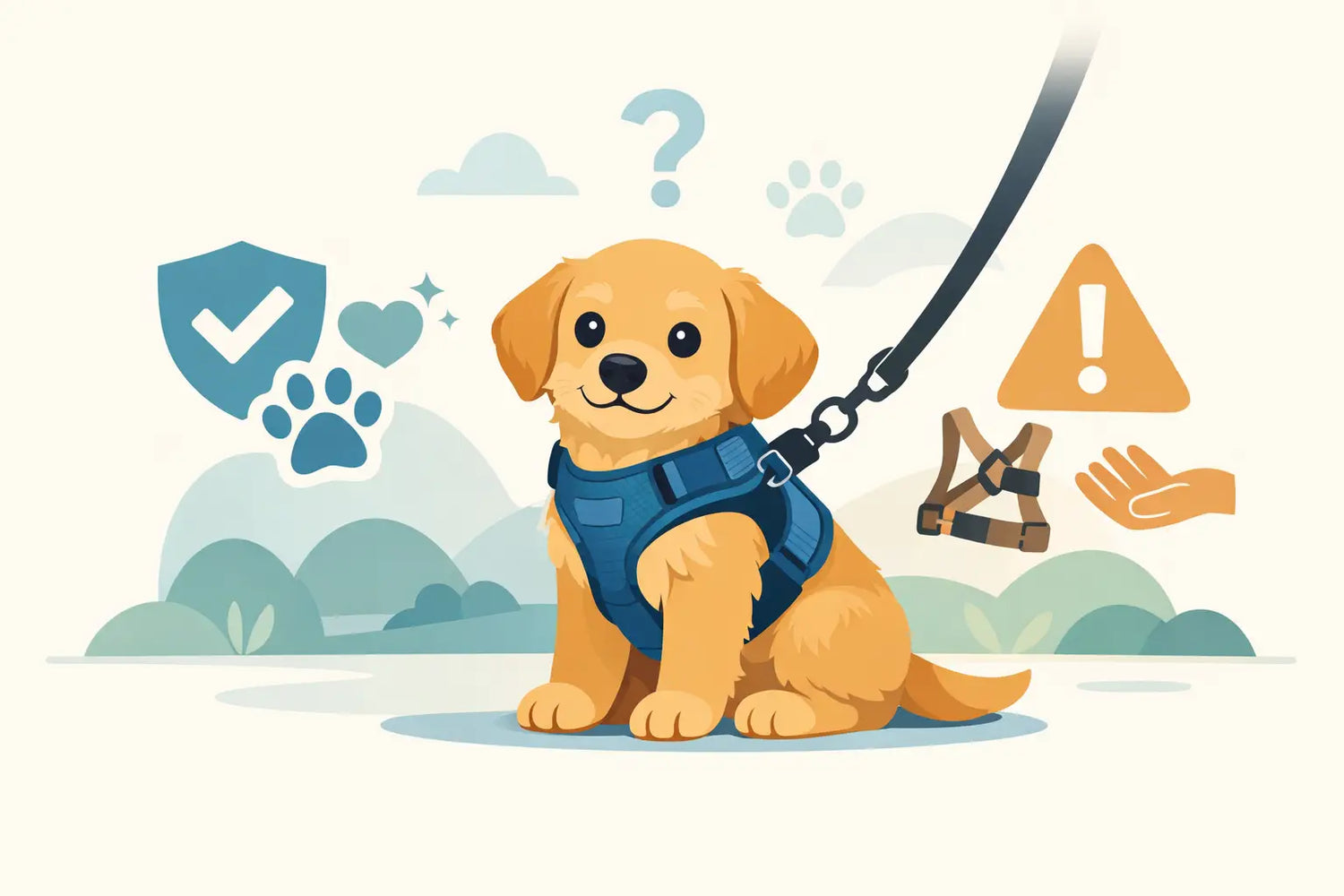
That first little harness fitting can feel oddly momentous. One minute your puppy is padding about the kitchen with oversized paws and a waggy tail, and the next you are wondering, can puppies wear harnesses without it affecting their growth, comfort or confidence? The reassuring answer is yes - many puppies can wear harnesses very happily, as long as the fit, style and timing are right.
For small breeds especially, a harness often feels like the gentler, more practical choice for early walkies and lead training. Puppies are still learning how to move with you, how to respond to gentle guidance, and how to explore the world without flinging themselves towards every leaf, pigeon and passing pram. A well-fitted harness can help make those first outings feel more secure for both of you.
Can puppies wear harnesses from a young age?
Usually, yes, but not from the moment they arrive home just for the sake of dressing them up for the day. Very young puppies do best with short, calm introductions indoors before a harness becomes part of proper walkies. That means letting them sniff it, wear it for a few minutes around the house, and pairing it with praise and treats so it feels normal rather than restrictive.
The exact age depends on your puppy, their size, and whether they are ready for lead training. Most owners begin introducing a harness while their puppy is still quite young, often before outdoor walks properly begin. That can be especially helpful because the harness becomes familiar before the excitement of the outside world gets involved.
What matters most is not a birthday milestone but whether the harness is lightweight, comfortable and correctly fitted. A puppy that freezes, scratches at it or seems overwhelmed may simply need a gentler introduction or a better style.
Why a harness often suits puppies better than a collar
For many puppies, especially tiny breeds, a harness spreads pressure more evenly across the body than a collar does around the neck. That can be useful when they are still learning not to pull, dart or twist about in excitement. Puppies are not known for measured decision-making, after all.
This does not mean collars are wrong. Many owners use both, with the collar for ID tags and the harness for lead attachment on walks. The advantage of a harness is that it can reduce strain on the delicate neck area, which is a real consideration for small dogs and young puppies with developing bodies.
There is a style element too, and for plenty of dog parents that matters. If your puppy is going to wear walking gear every day, it makes sense to choose something that feels lovely as well as functional. A soft, thoughtfully designed harness can become part of your puppy's everyday routine rather than a fussy bit of kit you both dread.
What to look for if can puppies wear harnesses is your main concern
If you are asking can puppies wear harnesses safely, the fit is where the answer is decided. Even the prettiest harness is not right if it rubs behind the legs, shifts across the chest or sits too tightly around the shoulders.
A good puppy harness should feel light, soft and secure without pinching. You want enough room to slide two fingers under the straps, but not so much room that your puppy can wriggle out. For small breed puppies, bulky hardware or stiff fabric can feel awkward quite quickly, so softer materials and an easy, adjustable fit tend to work best.
It also helps to choose a style that does not restrict natural movement. Puppies need to trot, bounce, sniff and learn. If the harness cuts across the shoulder in a way that shortens their stride, it may not be the best option for regular wear.
Easy on-and-off design matters more than people expect. A harness that turns every outing into a wrestling match is unlikely to build confidence. Calm walkies start before you even open the front door.
Signs the harness fits properly
Your puppy should be able to walk naturally, sit comfortably and lie down without the harness digging in or sliding sideways. The chest panel should sit neatly on the front of the body, not up near the throat. Straps should stay flat rather than twisting.
After wearing it, check the fur and skin. If you notice rubbing, missing fur, red marks or obvious irritation, the fit or fabric is wrong. Puppies grow quickly, so a harness that fitted beautifully two weeks ago may already need adjusting.
Signs it is not the right harness
If your puppy constantly chews it, freezes every time it goes on, or seems unable to move freely, do not assume they are simply being dramatic. Sometimes they are, but sometimes the harness is uncomfortable. Sliding, chafing and tightness around the front legs are common problems.
Another red flag is escape risk. Some puppies are tiny little magicians, especially nervous ones. If the harness gapes at the neck or chest, they may reverse out of it before you have made it to the end of the drive.
How to introduce a harness without the fuss
Start indoors, when nothing exciting is happening. Let your puppy sniff the harness, reward curiosity, then gently place it on for a few seconds. Praise, treat, remove. Repeat. The goal is to make the harness feel like a cue for something pleasant.
Once your puppy seems relaxed, leave it on for short periods around the house. Add a lead and let them walk about under supervision so they get used to the sensation. Keep sessions brief and cheerful. If your puppy turns into a statue, that is usually a sign to slow down, not push on.
Many owners worry if their puppy hops, scratches or flops dramatically the first few times. A little theatrics are common. What you are watching for is whether they settle quickly. If they do, you are probably on the right track.
Are harnesses safe for growing puppies?
In general, yes, provided they fit correctly and are used sensibly. A harness should not be worn so tightly that it interferes with movement, and it should not stay on all day unless there is a specific reason. Puppies benefit from comfort and freedom at home, so most do best when the harness goes on for training, outings and supervised wear rather than becoming permanent attire.
The main safety issue is not the idea of a harness itself. It is poor fit, rough pulling, and forgetting that your puppy is changing shape at astonishing speed. What fitted in spring may be snug by early summer.
If your puppy has a medical condition, unusual gait, or any concern involving joints or breathing, your vet is the right person to ask before choosing walking gear. That is especially true for very tiny breeds and brachycephalic puppies.
Choosing a harness for small breed puppies
Small dogs and puppies often need more delicate proportions than standard pet shop options provide. If the chest piece is too wide, the straps too heavy or the adjusters too bulky, the whole thing can sit awkwardly. A petite puppy does not need to feel as though they are modelling camping equipment.
Look for a harness that feels scaled properly for a little frame and gives you room to adjust as your puppy grows. Coordinated accessories can be a lovely bonus here because practical does not have to mean plain. Many owners enjoy choosing a matching lead or waste bag holder once they have found a harness their puppy genuinely likes wearing. It turns everyday walkies into more of a polished little ritual.
That balance of comfort and charm is where boutique dogwear really comes into its own. At Paw Wraps, for example, the appeal is not simply that a harness looks lovely, but that it can become part of a considered, comfortable walking set for dogs who are very much family.
When not to use a harness
A harness is not automatically the right choice in every single moment. If it is damaged, outgrown or causing rubbing, stop using it until you can replace or adjust it. If your puppy is in the middle of a messy chewing phase, avoid leaving it on unsupervised.
It is also worth remembering that no harness is a shortcut for training. If a puppy lunges, bites the lead or spins in circles, the answer is gentle practice and patience, not just tighter straps. The walking gear should support good habits, not force them.
For very nervous puppies, some styles may feel too enveloping at first. In that case, a lighter design and slower introduction often helps. It really does depend on the dog's temperament.
So, can puppies wear harnesses?
Yes - and for many puppies, especially small breeds, they are a wonderfully comfortable option for early lead training and daily walkies. The key is choosing a soft, well-fitted style, introducing it gradually, and checking the fit often as your puppy grows.
A puppy harness should make your little one feel secure, not squashed. It should help you enjoy those first neighbourhood strolls with more confidence and a bit less chaos. And when it fits beautifully and looks the part too, that is one small everyday joy well worth having.
The best walking kit is the kind your puppy barely notices - leaving them free to do what puppies do best: sniff everything, charm everyone, and trot beside you as though they have always belonged there.



Leave a comment
This site is protected by hCaptcha and the hCaptcha Privacy Policy and Terms of Service apply.