


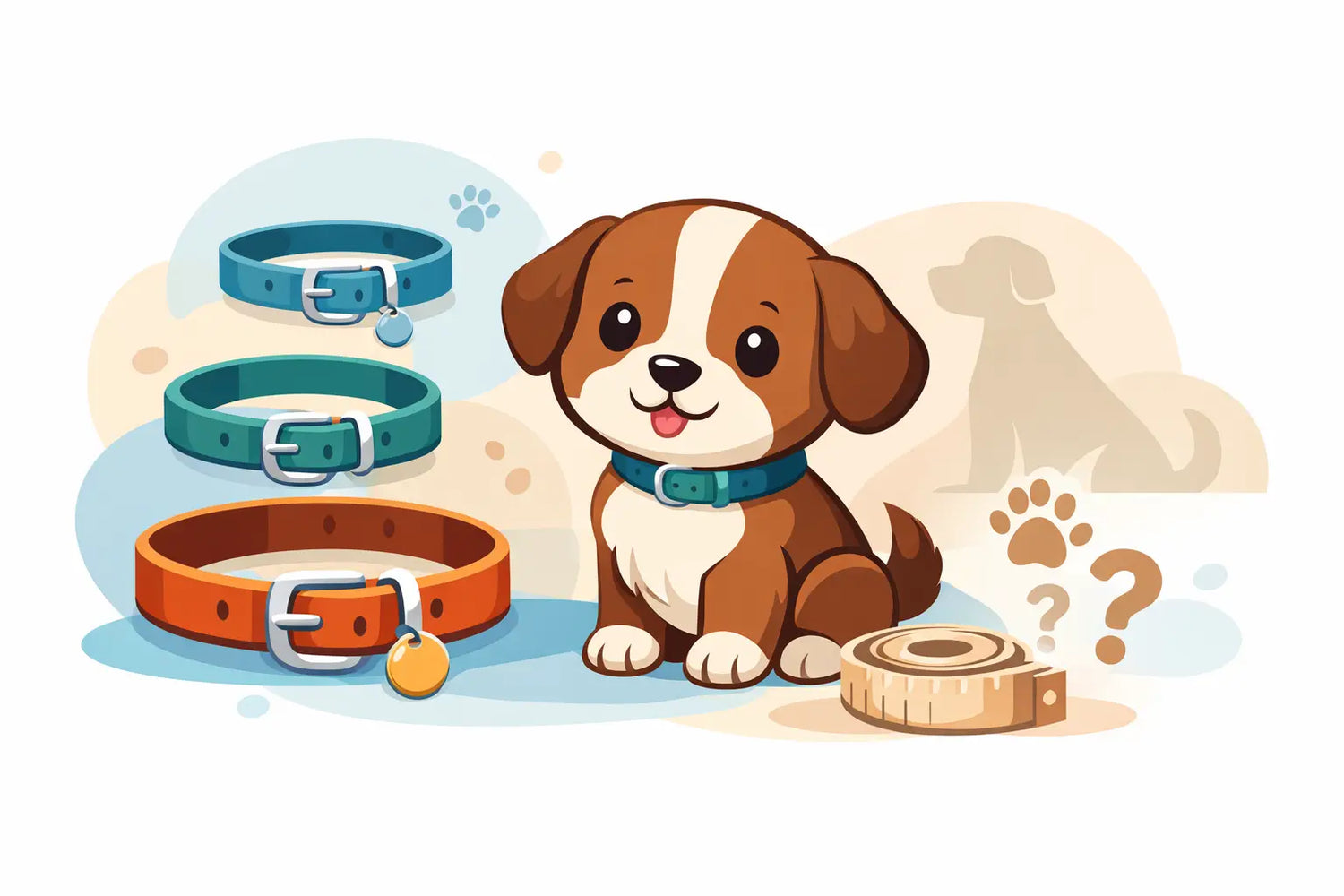
That tiny collar in the shop can look perfect until you fasten it and realise your puppy has either vanished inside it or is wriggling like a furry escape artist. If you’re wondering what size puppy collar to choose, the answer is less about breed labels and more about getting the fit right for your own pup’s age, neck shape and stage of growth.
For puppies, comfort comes first. Style matters too, of course - especially if you love a polished little walkies look - but a collar should never feel stiff, bulky or restrictive. The best one is light, soft and properly fitted, with enough room to sit comfortably on the neck without slipping over the head.
What size puppy collar depends on measurement first
It is tempting to buy by breed alone, especially with toy and small breeds. The trouble is that puppies vary enormously, even within the same litter. A Miniature Dachshund pup, a Cockapoo pup and a Chihuahua pup might all be similar in age and yet need very different collar lengths and widths.
The most reliable place to start is your puppy’s neck measurement. Use a soft tape measure and wrap it around the base of the neck, where the collar will naturally sit. It should be snug enough to get a true measurement, but not tight. If you do not have a fabric tape measure, a piece of string and a ruler will do the job nicely.
Once you have that neck measurement, add a little room for comfort. A well-fitted puppy collar should usually allow you to slide two fingers between the collar and your puppy’s neck. That classic two-finger rule is a useful guide, although with very tiny breeds and very fluffy coats, you still need to use a bit of judgement. If the collar rotates too freely or slips towards the head, it is probably too loose.
How to measure for the right puppy collar size
Measuring sounds simple, but puppies are famously unhelpful when they are feeling playful. It is easiest to measure when your pup is relaxed, perhaps after a nap or a little cuddle. Keep the tape level all the way around the neck and avoid measuring too high up near the ears, because that can give you a size that is too small for everyday wear.
If your puppy is between sizes, it is usually better to choose the size that gives you some adjustment room rather than the smallest possible fit. Puppies grow quickly, sometimes alarmingly quickly, and a collar that fits perfectly today can feel tight in a fortnight. That said, going too large is not the answer either. A collar that is too roomy can catch on things, slide off, or make your puppy uncomfortable.
The width matters as well as the length. For very small puppies, a narrower collar is often more comfortable because it feels lighter and sits more neatly on a delicate neck. A collar that is too wide can look lovely in a photo but feel rather overwhelming on a tiny dog.
A simple sizing example
If your puppy’s neck measures 20cm, you would usually want a collar that comfortably adjusts a little below and above that point - for example, something in an adjustable range such as 18-26cm. That gives you enough space for a secure fit now and a bit of growing room, without jumping to a size that will swamp your pup.
The exact range varies by brand, so always check the actual measurements rather than assuming that extra small means the same thing everywhere.
Puppy collar sizes by type of dog
If you are still trying to picture what size puppy collar might suit your dog, broad patterns can help, as long as you treat them as a starting point rather than a rule. Very small breeds such as Chihuahua puppies, Yorkshire Terrier puppies and Pomeranian puppies often need the smallest adjustable collar sizes, with slim, lightweight straps that do not feel bulky.
Small breed puppies such as Maltese, Miniature Dachshunds, Shih Tzus and Cavapoos may still need petite sizing, but often with a bit more adjustment room. Puppies with fluffier coats can appear larger than they really are, so it is especially worth measuring carefully rather than guessing by appearance.
Larger breed puppies are a slightly different story. Even when they are young, they may need more width and stronger hardware, but still with a soft feel against the neck. If you have a medium or large puppy, growth can be so rapid that frequent fit checks are part of the routine.
Signs the collar is the wrong size
A puppy will not always make it obvious when a collar is wrong, so a quick daily check is sensible, especially during the first few months. If the collar leaves marks, rubs the fur away, feels difficult to fasten or seems tighter after meals or naps, it is likely too small.
If your puppy can back out of it, catches a paw underneath it, or it slides up towards the ears, it is probably too loose. You may also notice fussing when you put it on, scratching at the neck or a general reluctance to wear it. Some puppies simply need time to get used to a collar, but discomfort should never be dismissed as puppy drama.
A good fit should feel secure and almost unremarkable. Your puppy should be able to move, sniff, nap and trot about without the collar becoming the main event.
Collar or harness for a puppy?
This is where a little nuance helps. A collar is useful for carrying ID and helping your puppy get used to wearing accessories, but many pet parents prefer a harness for lead walking, especially with small breeds and young puppies. Harnesses can reduce pressure on the neck and often feel more secure for excitable little walkers.
That does not mean a collar is unnecessary. In the UK, dogs in public should wear a collar with identification when appropriate, and many owners use a collar for tags while relying on a harness for actual walks. For tiny or delicate pups, this can be a lovely balance of practicality and comfort.
If you adore a coordinated look, a matching harness and collar set can also make everyday outings feel a bit more special without compromising on function. Pets are more than just companions - they’re family - and there is nothing wrong with wanting their essentials to be both comfortable and beautifully chosen.
What to look for beyond size
Once you know what size puppy collar your dog needs, the finer details matter. Soft materials help prevent rubbing, particularly on short coats or sensitive skin. Adjustable fittings are ideal because puppies rarely stay the same size for long. Lightweight hardware is also worth looking for, especially for toy breeds, as heavy clips can feel clunky on a tiny neck.
Easy cleaning is another practical point people often forget. Puppies manage to get mysteriously grubby with astonishing speed, whether that is garden mud, breakfast remnants or a bit of overenthusiastic sniffing. A collar that stays smart and is simple to wipe or wash earns its place very quickly.
And then there is the style side, which is not frivolous at all. A thoughtfully chosen collar becomes part of your puppy’s daily routine and personality. A neat floral print, a classic check or a charming seasonal design can make ordinary walkies feel just that little bit more joyful.
How often should you check puppy collar size?
More often than most people think. In the earliest months, it is wise to check the fit every few days, particularly for fast-growing pups. Run your fingers under the collar, look for any rubbing, and see whether you are still using the same adjustment hole or notch as last week.
Growth spurts can creep up on you. One day the collar fits beautifully, and the next it feels oddly snug. Regular checks are the easiest way to avoid discomfort and keep your puppy safe.
If you are buying a first collar as a gift, choose something adjustable rather than highly fixed in size. That gives the new puppy parent a little breathing room and makes the collar useful for longer.
The best answer to what size puppy collar is this
Measure first, then choose an adjustable collar that fits your puppy now with a little room to grow. Do not rely solely on breed guesses, and do not be tempted to size up too much in the hope of getting extra wear. A puppy collar should feel light, secure and comfortable enough for everyday life, whether your little one is curled up at home or stepping out for very stylish first walkies.
If you are ever unsure between two sizes, comfort and safe fit should win over looks alone. The prettiest collar is the one your puppy hardly notices - and the one that lets them move through those early adventures feeling cosy, confident and completely loved.

Leave a comment
This site is protected by hCaptcha and the hCaptcha Privacy Policy and Terms of Service apply.