


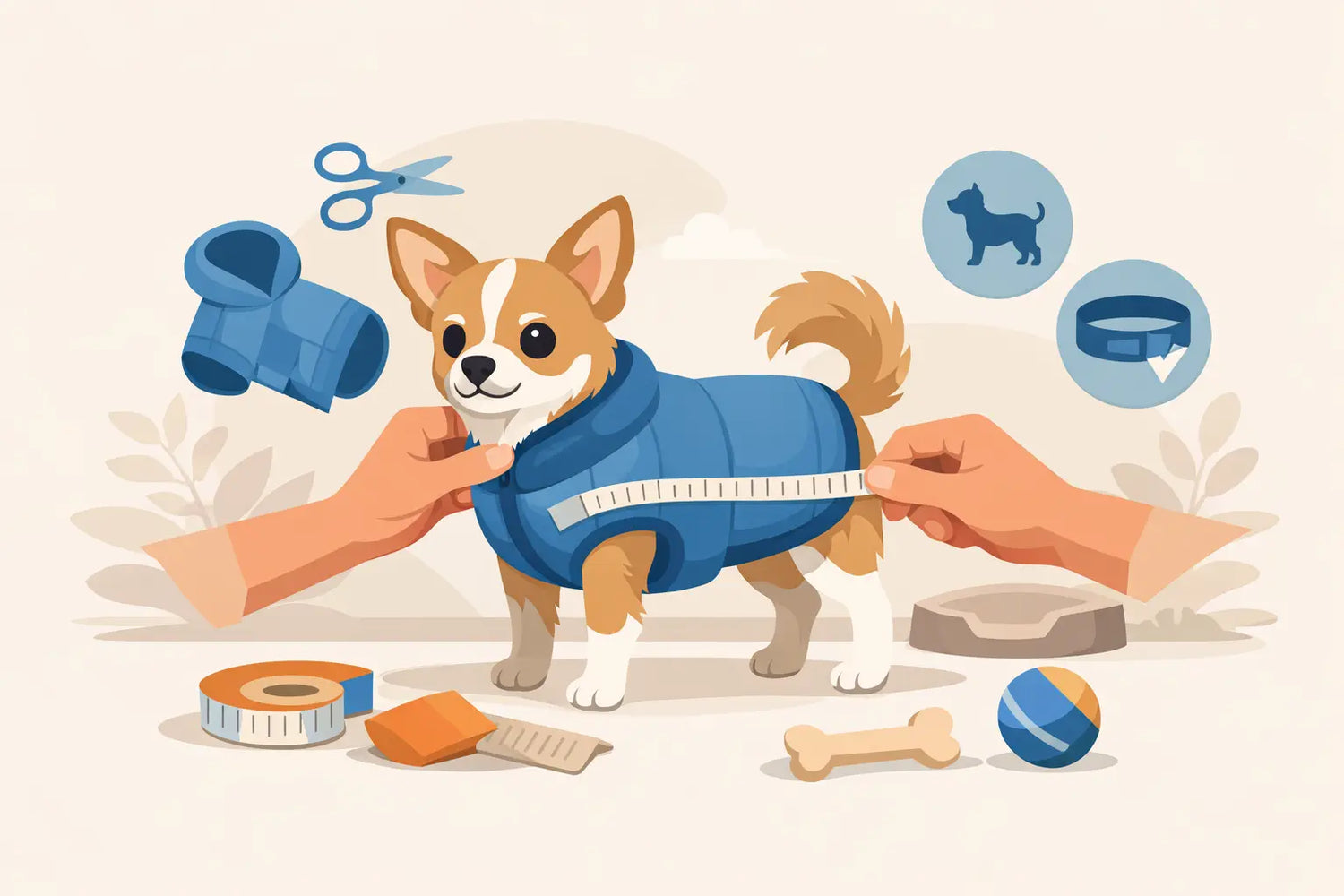
Tiny dogs have a special talent for wriggling out of anything that is even slightly off. One coat slips over the shoulders, another bunches under the chest, and suddenly your stylish little walking companion is doing the awkward penguin shuffle. If you are wondering how to fit small dog coats so they look lovely and feel comfortable, the secret is not guessing by breed alone. It is all about shape, proportion and how your dog moves once the coat is actually on.
Small breeds and puppies often need a more careful fit than larger dogs because a few centimetres can make a big difference. A coat that looks neat in a product photo can rub under the front legs, press on the throat or leave the tummy exposed if the measurements are wrong. The good news is that fitting a coat properly is straightforward once you know what to check.
How to fit small dog coats without guesswork
Before you shop, take fresh measurements. Do not rely on the size your dog wore last winter, and do not assume a Chihuahua, Yorkie or Mini Dachshund will fit the same standard size every time. Small dogs vary enormously in chest depth, neck shape and back length.
The three measurements that matter most are the neck, chest and back. For the neck, measure around the base where a collar would naturally sit, not high up under the chin. For the chest, measure the widest part just behind the front legs. For the back, measure from the base of the neck to where you want the coat to finish, usually just before the tail.
Use a soft tape measure and keep it snug but not tight. If your dog has a fluffy coat, flatten the fur gently rather than measuring over full fluff. If your dog falls between sizes, the chest measurement usually matters most for coats because that is where a poor fit tends to feel restrictive.
Start with the chest, then balance the rest
For small dog coats, the chest is often the deciding factor. A coat can be slightly longer on the back and still work beautifully, but if the chest is too tight your dog will feel it with every step. It can restrict shoulder movement, dig into the underarm area and make even a calm dog suddenly reluctant about walkies.
A good chest fit should feel secure without pinching. You should be able to slide two fingers comfortably between the coat and your dog. If the fastening strains, pulls sideways or sits unevenly, size up. If the coat hangs away from the body or twists when your dog turns, size down or look for a different cut.
Back length comes next. On a petite dog, too much length can be as awkward as too little. A coat that reaches too far may interfere with toileting or bunch when your dog sits. A slightly shorter coat is often the better choice if your dog has a compact build, as long as it still covers the main part of the back and ribcage.
Neck fit matters too, especially for dogs who dislike anything close around the throat. The neckline should sit neatly at the base of the neck without gaping or pressing upward. If your dog already wears a harness, it also helps to think about how the coat and harness will sit together rather than treating them as separate pieces.
Why breed guides only get you so far
Breed suggestions are useful as a starting point, but they are not a perfect sizing tool. A slim Italian Greyhound puppy and a sturdy French Bulldog puppy may have similar back lengths but completely different chest shapes. Even within one breed, some dogs are fine-boned and dainty while others are broader through the front.
That is why the best-fitting coat is usually chosen by measurement and body shape, not by a breed label on its own. If your dog has a broad chest, a long body or a particularly fine neck, trust the tape measure every time.
What a well-fitted coat should look like
Once the coat is on, step back and look at the full picture. The fit should appear clean and balanced, not strained at the front and not drooping over the back end. Your dog should be able to walk, sit and sniff about naturally without needing to adjust.
A well-fitted small dog coat should lie flat along the back and chest. It should not pull to one side or leave big gaps near the shoulders. The front legs should move freely without the edge of the coat rubbing the armpits. Around the tummy, it should feel tidy and secure while still allowing easy toilet breaks.
The best test is movement. Encourage your dog to walk across the room, turn around and sit down. If the coat shifts dramatically, rides up at the neck or slides sideways, the fit is not quite right. A little settling is normal, especially on very active dogs, but repeated twisting usually means the proportions are off.
Signs the coat is too small
The clues are usually easy to spot once you know them. A coat is likely too small if your dog freezes when it is fastened, the chest fastening feels tight, the neckline presses into the throat or the fabric pulls across the shoulders. Some dogs will also lick at the coat or take short, stiff steps.
If the back looks smooth but the front seems strained, do not be tempted to keep it just because it technically closes. Small dogs need room to move comfortably, especially around the shoulder area.
Signs the coat is too big
Oversized coats can look cosy at first, but they often become fussy to wear. If the coat slips backwards, sags under the chest, bunches at the neck or shifts from side to side on walks, it is too roomy. A coat that is too large can also let cold air in and offer less practical protection in wet weather.
For puppies, there is always a temptation to buy extra room to grow. A little allowance is sensible, but too much can make the coat uncomfortable now. It is better to have a proper fit for the current season than a wardrobe piece your puppy cannot move in happily.
How to fit small dog coats over a harness
Many small dogs wear a harness every day, so the coat needs to work with it rather than against it. This is especially important for dogs who should not have pressure on the neck. If your dog walks in a harness, check whether the coat is designed to sit over it neatly or whether there is an opening in the right position.
When fitting over a harness, put the harness on first, then the coat. Make sure the extra layer does not make the coat suddenly too snug across the chest. You want everything to sit flat, without bulky bunching at the shoulders. If the harness clips or rings create pressure points under the coat, the overall fit may be too tight even if the coat looks fine on its own.
Matching practical pieces can make everyday dressing feel much more polished, but comfort always comes first. A coordinated look only works when your dog can strut about happily in it.
Fabric, fastening and cut all affect fit
Not every coat fits the same way, even in the same size. Waterproof coats often have a more structured shape, while knitted or softer styles may allow a little more flexibility. A Velcro fastening gives some adjustability, which can be helpful for dogs between sizes, while fixed fastenings tend to need a more exact fit.
Cut matters just as much as measurement. Deep-chested dogs may suit a different shape from rounder, fluffier little breeds. Dogs with long backs and shorter legs often need extra care to avoid dragging or bunching underneath. If your dog dislikes overhead dressing, a style that fastens around the chest and belly may be easier than one that needs more handling.
This is where premium, thoughtfully designed dogwear really earns its place. When the proportions are considered properly, the coat not only looks charming but also feels much easier to wear day after day.
Fitting tips for nervous dogs and wriggly puppies
If your puppy or small dog is new to coats, keep the first fitting calm and quick. Let them sniff the coat, reward them, and try it on indoors before heading outside. A few treats and a cheerful voice can work wonders.
Do not judge the fit from the first five seconds if your dog is doing dramatic statue mode. Many dogs need a moment to realise the coat is not ruining their life. Watch what happens once they take a few natural steps. If they relax and move freely, the fit is probably fine. If they continue to hunch, scratch or crab-walk sideways, something needs adjusting.
At Paw Wraps, we know pets are more than just companions - they are family, and the right coat should feel like a little act of care as well as a stylish finishing touch.
The fit sweet spot to aim for
The best small dog coat fit sits in that lovely middle ground between snug and easy. It protects without squeezing, looks neat without being stiff, and stays in place without constant fussing from you. That sweet spot can vary slightly depending on your dog’s shape, coat type and whether they wear a harness underneath, so there is no shame in taking an extra minute with the tape measure.
If a coat lets your dog trot out the door comfortably, keeps them covered where it counts and still leaves them looking utterly adorable, you have found the right one. And that makes every chilly walk a little smarter, a little cosier and a lot more joyful.


Leave a comment
This site is protected by hCaptcha and the hCaptcha Privacy Policy and Terms of Service apply.