


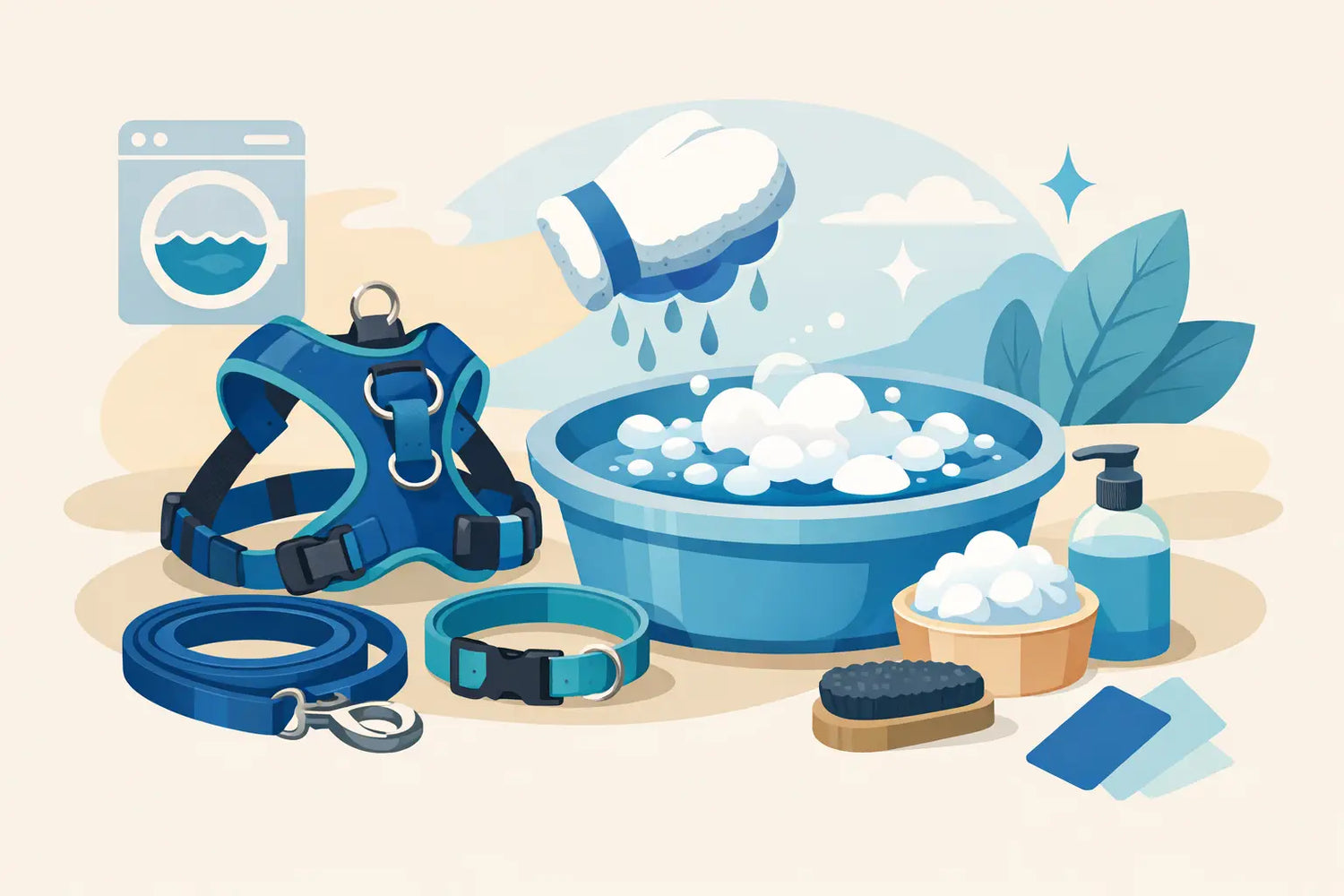
A muddy paw print on a pretty print is practically a badge of honour after a joyful walkies. Still, when your pup’s harness, lead and matching accessories are part of their everyday look, a little thoughtful care keeps every colour, pattern and polished detail looking lovely. Knowing how to clean dog harness sets properly means you can deal with drizzle, dust and the occasional puddle without being too heavy-handed on the fabrics.
For toy breeds and puppies especially, harnesses often sit close to the chest, underarms and neck, where everyday oils, damp fur and city grime can quickly build up. The aim is not to make every piece look brand-new after every outing. It is to keep it fresh, comfortable and ready for the next coordinated adventure.
Before You Clean a Dog Harness Set, Check the Details
Start with the care instructions supplied with your harness. Materials vary, and a washable fabric harness may need a different approach to a waterproof coating, faux leather trim, delicate bow or metal hardware. If the label advises hand washing only, follow it. A few extra minutes at the sink are far preferable to shrinking a favourite harness or dulling a special print.
Unclip the lead, remove any detachable sailor bow, collar flower, waste bag holder or treat pouch, and clean each item separately. This prevents metal clips catching on fabric and lets you give the areas that actually need attention the right amount of care. It also stops a damp lead or pouch from holding moisture against a freshly washed harness.
Before introducing water, give the set a gentle shake outside. Use a soft, dry brush or clean cloth to lift dried mud, grass and loose hair from straps, seams and the lining. This simple step makes washing much easier, particularly after a country walk where mud has dried into the webbing.
How to Clean Dog Harness Sets by Hand
Hand washing is generally the kindest option for printed harnesses and matching accessories. It gives you control over the water temperature, the pressure you use and how long the fabric stays wet.
Fill a clean basin with cool to lukewarm water. Hot water can affect colour and may weaken glues, coatings or trims over time. Add a very small amount of mild detergent suitable for delicate fabrics. Choose one without bleach, whitening agents, harsh stain removers or a strong fragrance. Dogs have sensitive noses, and detergent left behind can irritate skin as well as overwhelm their excellent sense of smell.
Place the harness in the water and gently move it through with your hands. Let it soak for around five to ten minutes if it is generally grubby, but avoid leaving it submerged for hours. Use a soft toothbrush or a small nail brush to work carefully around buckle edges, stitching, chest panels and any padded sections. These are the places where damp fur and dust tend to settle.
For a mark on a pale fabric or a bright seasonal print, spot clean first rather than scrubbing the whole harness. Dampen a soft cloth with the mild soapy water and dab the mark from the outside in. Rubbing hard can spread a stain and roughen the surface of the material. If the mark does not lift straight away, repeat gently after a short soak rather than reaching for stronger cleaning products.
Rinse thoroughly in cool, clean water until there are no suds left. This matters more than it seems: detergent residue can make a harness feel stiff and may cause discomfort where it rests beneath your dog’s front legs.
Cleaning the Lead, Collar and Little Extras
Matching leads and collars collect a different sort of dirt. The handle of a lead picks up hand cream and everyday oils, while the lower section may meet pavement splash or wet grass. Wipe light dirt away with a damp cloth, then hand wash more thoroughly when needed. Work the cloth around the lead’s handle, joins and clip, taking care not to soak any decorative elements unnecessarily.
Collars can be washed in the same mild solution, with particular attention to the underside and adjustment holes. For detachable bows and flowers, use a light spot clean unless their own care guidance says they are washable. These smaller finishing touches can lose their shape if they are saturated or twisted.
Waste bag holders and treat pouches benefit from regular emptying and a quick wipe inside. Crumbs, soft treats and the odd forgotten bag can create lingering smells, even when the outside still looks perfectly presentable. Let every accessory dry fully before putting the matching set back together.
Can You Put a Dog Harness in the Washing Machine?
Sometimes, yes - but only when the care label permits it. A machine wash is handy after an especially muddy weekend, yet it is not always the gentlest choice for structured harnesses, padded pieces, decorative trims or items with coated finishes.
If machine washing is approved, fasten all buckles and Velcro-style closures first. Place the harness, collar and lead in a mesh laundry bag or pillowcase secured with a knot. This protects the fabric and prevents hardware from knocking against the washing machine drum. Wash on a cool, delicate cycle with a small amount of mild detergent, and keep the set away from towels, jeans and anything with zips or hooks.
Never use fabric conditioner. It can leave a coating that affects breathability and may make webbing feel slippery. Bleach and stain-removing powders are also best avoided, even for light-coloured fabrics. They can fade a lovely design or irritate sensitive puppy skin.
Drying Without Losing Shape or Colour
Do not tumble dry a harness set unless its specific care instructions clearly say that you can. High heat can warp plastic clips, damage elastic, shrink fabric and leave padding uneven. It may also make metal fittings uncomfortably hot or encourage rust where water has been trapped.
Instead, press the washed item gently between clean towels to remove excess water. Do not wring or twist it, as this can pull straps out of shape. Reshape padded chest panels with your hands, open the straps fully and hang the harness in a well-ventilated spot to air dry.
Keep it out of direct sunlight and away from radiators. Sunshine can fade bold prints over time, while intense indoor heat can make fabrics stiff. Depending on the padding and the weather, drying may take overnight or longer. Check around seams, folds and buckles before your dog wears it again. A harness that feels dry on the surface can still be damp underneath.
Keep Clips and Buckles Working Beautifully
Fabric gets most of the attention, but clean hardware is just as useful for safe, fuss-free walks. Once the harness is dry, wipe clips, D-rings and adjusters with a soft dry cloth. Use a cotton bud to remove grit from tight spaces, especially after sandy beach trips or muddy woodland strolls.
Test each buckle by clicking it closed and opening it again. The movement should feel smooth, not sticky or gritty. Do not apply household oils, polish or perfume to the hardware. If a clip is cracked, bent, heavily corroded or no longer closes securely, retire the item rather than hoping it will manage one more walk.
While you are checking the fittings, inspect stitching and webbing too. Look for fraying, loose threads, stretched adjustment points and signs of chewing. A clean harness is the ideal moment to spot wear before it becomes a safety issue.
A Fresh-Set Routine That Is Easy to Keep
You do not need to wash a harness after every walk. For most small dogs, a quick wipe after wet weather and a proper clean every few weeks is enough. It depends on your routine: a city pup who stays on pavements may need less washing than a little explorer who loves a muddy field, while puppies often need more frequent freshening as they learn the art of keeping their paws out of puddles.
A simple routine helps your favourite coordinated pieces last longer:
- Wipe away dampness, salt and mud when you get home.
- Air the harness rather than leaving it in a closed walking bag.
- Wash the full set after muddy outings, beach days or messy treat-pouch incidents.
- Rotate between sets where possible, giving each one time to dry and rest.
A well-cared-for harness set is more than a tidy walking essential. It is the little ready-to-wear detail that lets your dog step out feeling comfortable, cared for and perfectly put together - whatever the British weather has planned.

Leave a comment
This site is protected by hCaptcha and the hCaptcha Privacy Policy and Terms of Service apply.