


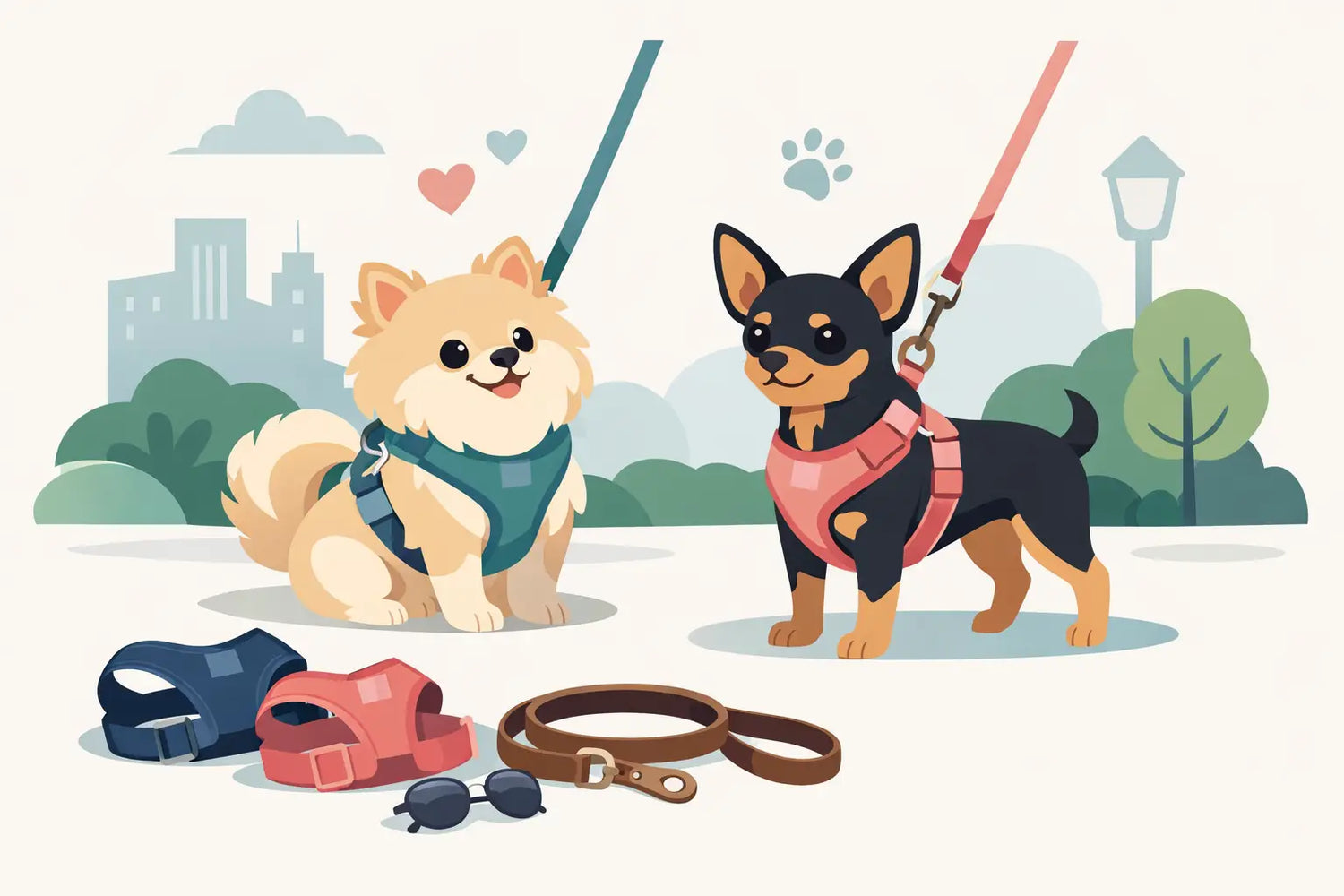
That awkward little wiggle at the front door usually tells you everything you need to know: your dog is ready for walkies, but their harness is not. For tiny dogs and puppies, fit matters far more than many owners expect, which is why a proper small breed harness guide can save a lot of fuss, slipping and mid-walk readjusting.
Small breeds have their own quirks. A broad chest on a Frenchie, a delicate neck on a Chihuahua, a fluffy coat on a Pomeranian, or that gangly growing stage every puppy seems to hit at once can all change what feels comfortable and secure. A harness that looks lovely on the hanger still needs to sit neatly on the dog, move well, and stay put when excitement levels soar.
Why a small breed harness guide matters
When your dog is little, every detail is more noticeable. Straps that are slightly too loose can shift quickly. Hardware that feels standard on a larger dog can feel heavy on a smaller frame. Even the position of a chest panel can affect how naturally your dog walks.
That is why choosing for a small breed is rarely just about size labels. Extra small in one style may fit beautifully, while extra small in another may rub under the leg or sit too close to the throat. The best harness for a tiny dog balances three things at once: comfort, security and a polished look you genuinely enjoy reaching for every day.
For style-conscious pet parents, there is also the reality of everyday life. If your dog wears a harness more often than a collar, it becomes part of their wardrobe. You want something practical enough for real walkies, but still charming enough to suit matching leads, coats and little finishing touches.
Start with fit, not print
It is very tempting to fall in love with the pattern first. We understand. A beautiful print can make an ordinary walk feel instantly more special. But fit comes before fashion, always.
A well-fitted harness should sit securely without pressing into the neck. You should be able to adjust it so it feels snug but not restrictive, with enough room for comfortable movement. As a general rule, if it twists easily to one side or gapes when your dog pulls back, it is too loose. If it leaves marks in the coat or seems to pinch behind the front legs, it is too tight.
Small dogs can be particularly skilled at reversing out of poorly fitted harnesses. That matters even more in busy places, near roads, or during puppy training when confidence can wobble from one moment to the next. A secure fit helps your dog feel held rather than trapped, which often leads to calmer, happier walks.
Measuring your dog properly
Before buying, measure the chest at the widest part, usually just behind the front legs, and check the neck area if the harness style calls for it. If your dog is between sizes, think about their coat, body shape and age.
A puppy who is growing quickly may need a little adjustment room. A very fluffy dog might need a slightly different fit from a smooth-coated dog with the same measurements. If your dog is especially petite, avoid guessing based on breed alone. Two dogs of the same breed can fit very differently.
The best harness styles for small dogs
Not every harness style suits every little dog. This is where a small breed harness guide becomes genuinely useful, because body shape and walking habits matter just as much as measurements.
Step-in harnesses
Step-in styles can work beautifully for dogs who dislike anything being slipped over the head. They are often easier for wriggly puppies and can feel less fiddly once you get the hang of them. The trade-off is that they still need careful adjustment. If they are too loose through the chest, a determined little dog may manage to back out.
Vest-style harnesses
Vest-style harnesses are popular for good reason. They can distribute pressure more evenly and often feel especially comfortable on delicate small breeds. They also tend to look lovely, which never hurts. For dogs with very thick coats, though, you will want to check that the fit stays secure and does not become bulky.
Adjustable strap harnesses
If your dog is difficult to fit, an adjustable style is often the most forgiving option. More adjustment points can help create a neater fit across the chest and shoulders. The only downside is that very minimal designs are not always as soft against the body as a more padded style.
Comfort details that matter more than you think
For little dogs, comfort is not a luxury feature. It is the difference between a harness they forget they are wearing and one they spend the whole walk scratching at.
Soft edging, lightweight hardware and breathable materials all make a difference. Padding can be helpful, but too much bulk is not always ideal for tiny frames. What you want is gentle structure, not anything stiff or cumbersome.
Look closely at where the harness sits under the front legs. Rubbing in that area is one of the most common fit issues for small breeds. If your dog has fine skin, short hair, or wears a harness daily, this becomes even more important.
Season also plays a part. In warmer weather, lighter fabrics can feel more comfortable. In colder months, you may need to consider how the harness works with knitwear or a coat. A lovely coordinated look is all very well, but your dog still needs to move freely without bunching or pressure.
Style should still earn its place
A premium harness ought to be practical, but there is no reason it should not be gorgeous too. For many dog owners, choosing accessories is part of the joy. Pets are more than just companions - they are family, and dressing them with care can make ordinary routines feel a little more special.
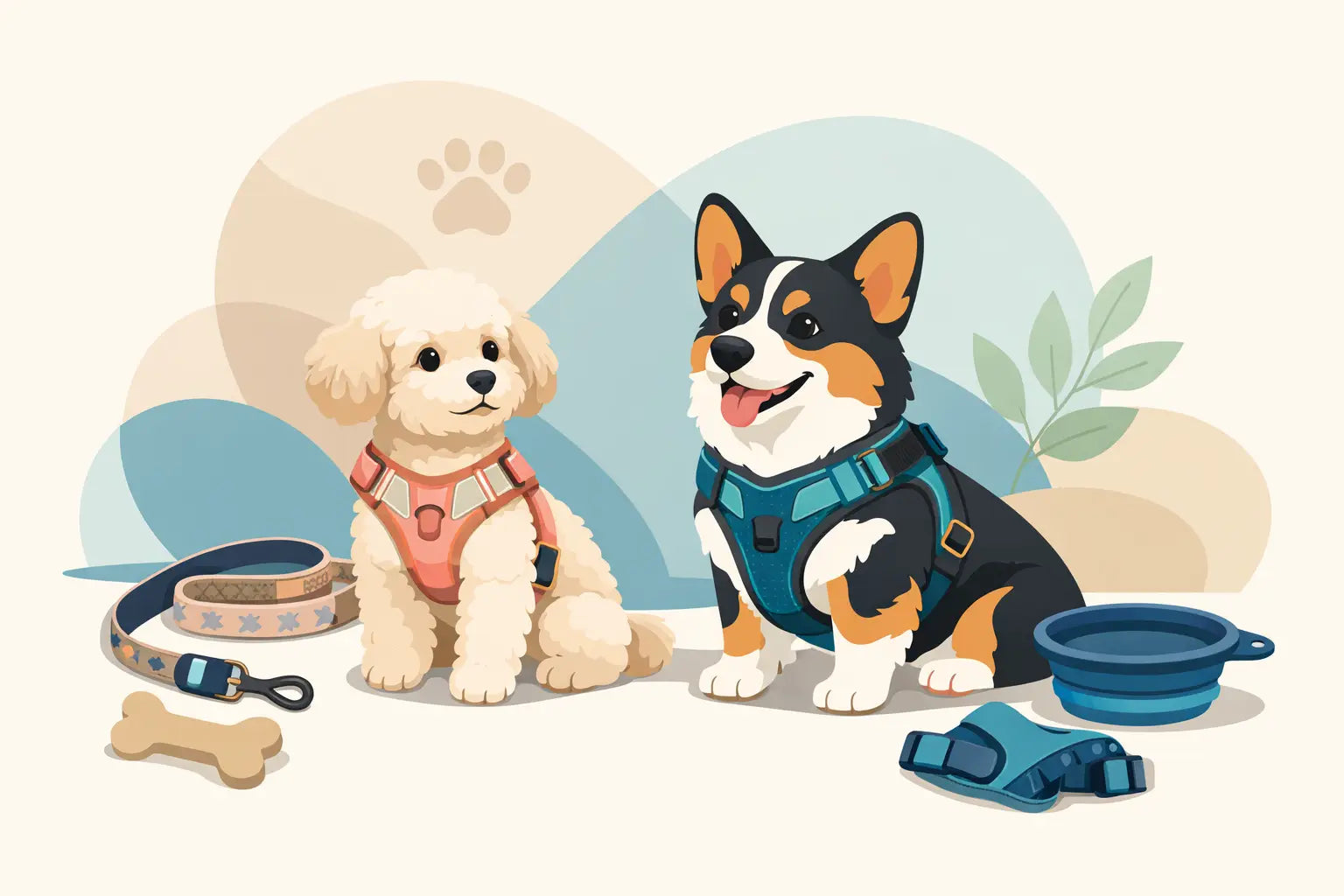
The trick is to choose style that works hard. Prints, trims and coordinated sets should still be easy to wear, easy to clean and easy to pair with the rest of your dog’s walking essentials. Matching pieces are not simply about appearance either. They make everything feel more considered, from the lead in your hand to the waste bag holder clipped neatly in place.
Boutique brands such as Paw Wraps understand that balance particularly well. Small dog owners are not only shopping for function. They are often looking for a polished, giftable feel that turns daily walkies into a charming little ritual.
Common mistakes owners make
One of the biggest mistakes is choosing too large a harness because it looks more comfortable. In reality, excess movement often causes more irritation than a properly snug fit.
Another is forgetting that puppies change quickly. A harness that fitted perfectly six weeks ago may suddenly sit too high under the arms or too tightly across the chest. Regular fit checks matter, especially during growth spurts.
Some owners also keep using a style their dog clearly dislikes because it is fashionable or expensive. If your dog freezes, scratches constantly, or seems unhappy every time the harness comes out, something needs adjusting. Sometimes the fit is wrong. Sometimes the style simply is not right for that dog.
How to know you have found the right one
Your dog usually tells you. They move naturally, without hopping, flattening or fussing. The harness stays in position during normal walking. You can fasten it without a wrestling match. And when you pick it up before a walk, your dog’s reaction is excitement rather than suspicion.
You will notice it too. Leads clip on neatly, the harness feels secure in your hands, and the whole walking routine becomes easier. That is the sweet spot - something your dog is comfortable wearing and you genuinely love using.
If you are building a full walking set, think about your dog’s lifestyle as well as their wardrobe. A puppy doing short training walks may need something different from an adult companion who joins you for café stops, country strolls and everyday errands. It depends on your routine, your dog’s confidence and the weather you are dressing for.
A final word on choosing well
The best harness is not always the fanciest or the most technical. For small breeds, it is the one that fits beautifully, feels soft enough for everyday wear and still makes you smile when it is time for walkies. Choose with your dog’s comfort first, your practical routine second, and your personal style a very close third - and you will end up with something that feels just right for both of you.

Leave a comment
This site is protected by hCaptcha and the hCaptcha Privacy Policy and Terms of Service apply.