


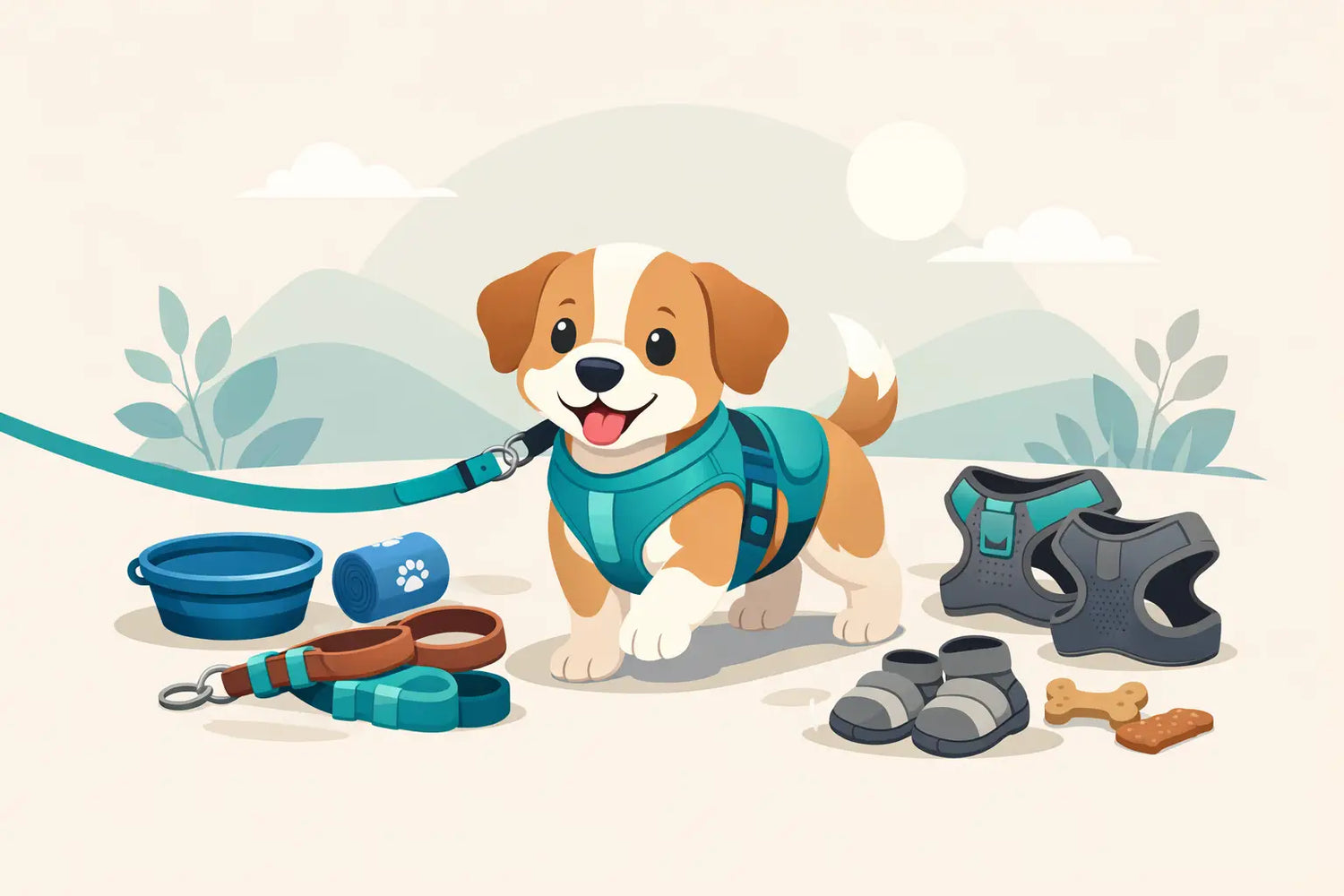
The first few walks with a puppy are rarely picture-perfect. One minute they are trotting along as if they were born for walkies, the next they are sitting down dramatically, chewing the lead or trying to wriggle out of a collar that never felt quite right. That is why comfortable puppy walking gear matters so much. When your puppy feels secure, supported and free to move, every outing becomes calmer, safer and much more enjoyable for both of you.
For small breeds especially, comfort is not a nice extra. It is the starting point. Puppies have delicate necks, soft coats, growing bodies and very little patience for anything stiff, bulky or awkward. The right walking set should feel gentle against the skin, sit neatly without rubbing and help your puppy build positive associations with being out and about.
What comfortable puppy walking gear really means
Comfort is about more than softness. A plush fabric may feel lovely in your hand, but if the fit is poor or the shape restricts movement, your puppy will tell you quickly. Comfortable puppy walking gear should support natural movement through the shoulders and chest, avoid pressure on the throat and stay in place without pinching.
That usually means choosing pieces designed with small dogs and puppies in mind rather than scaling down something made for larger breeds. Tiny frames need lighter materials, more thoughtful proportions and fastenings that do not feel heavy or clunky. If a harness shifts from side to side, slips up into the neck or digs in behind the front legs, it is not the right one, no matter how pretty it looks.
Style still matters, of course. For many pet parents, walkies are part of daily life and part of how they express their dog’s personality. The sweet spot is gear that looks beautifully put together while also doing the practical work quietly in the background.
Start with the harness, not the accessories
If there is one piece worth getting right first, it is the harness. A well-fitted harness gives you control without putting strain on a puppy’s neck, which is especially helpful while lead training is still a work in progress. Puppies lunge, stop suddenly, zigzag and get distracted by absolutely everything. A harness spreads pressure more evenly and tends to feel far kinder during those unpredictable moments.
The best harness for a puppy is usually lightweight, breathable and adjustable enough to cope with growth spurts. You want a snug fit, but not a tight one. As a guide, you should be able to slip two fingers between the harness and your puppy’s body. Less than that can lead to rubbing. Much more than that can mean escape risk.
Soft edges make a noticeable difference, particularly for short-coated breeds or puppies with sensitive skin. So does shape. A harness that sits across the chest without blocking the shoulders allows a more natural stride, which matters more than many owners realise. If your puppy starts moving oddly, slowing down or scratching at the harness, the issue may be the cut rather than the lead training itself.
Why collars are not the whole answer for puppies
A collar still has its place. It is useful for an ID tag and for quick trips in and out of the house. But for actual walks, many puppies are more comfortable in a harness-led setup. Small breeds can be especially vulnerable to neck strain, and puppies are notorious for sudden pulling.
That does not mean a collar should be ignored. It should still be soft, light and properly fitted. You should be able to fit two fingers underneath it comfortably, and it should not slide over the head or twist around too easily. Think of the collar as part of the outfit, but not always the main walking tool.
Leads should feel light in your hand and gentle for your puppy
The lead is where human comfort and puppy comfort meet. A heavy clip can knock against a tiny chest, while a thick, weighty lead may feel cumbersome for a small puppy still learning how to walk alongside you. Lighter leads with secure but compact hardware tend to work best for little dogs.
Length matters too. Very short leads can create tension and frustration, while extra-long ones may encourage tangling and make early training harder. For most puppy walks, a standard lead offers enough freedom for sniffing without turning every outing into a choreography problem.
There is also the matter of grip. If the handle is rough or the lead feels awkward in your hand, you are less likely to enjoy the routine. The nicest walking sets are the ones that feel thoughtfully coordinated from end to end - practical, polished and easy to use every day.
Don’t overlook weather when choosing puppy walking gear
British weather is not famous for its consistency. One morning may be crisp and dry, the next damp and blustery, and small puppies feel those changes quickly. Comfortable puppy walking gear often includes weather layers, not just harnesses and leads.
A lightweight waterproof coat can be a real help for puppies who are low to the ground or have fine coats. It keeps chill and drizzle from turning a short walk into an unpleasant experience. In colder months, a soft dog sweater can add warmth without bulk, especially for tiny breeds that seem to lose heat the moment they step outside.
The key is to avoid over-layering. If a coat is too stiff, too hot or sits badly over the harness, comfort disappears fast. Look for pieces that allow free movement and pair neatly with the rest of the walking set. A puppy should still be able to sniff, trot and bounce about as usual.
The extras that make walkies easier
Once the harness and lead are sorted, the little details start to matter. Waste bag holders, treat pouches and dog walking bags may sound like finishing touches, but they shape the whole rhythm of a walk. If you are fumbling for treats in one pocket and poo bags in another, the experience feels less calm than it could.
Matching accessories are not just for looks, though a coordinated set does make everyday outings feel a bit more special. They help keep everything organised, which is particularly useful during puppyhood when rewards, clean-up supplies and quick transitions are part of every single walk.
For style-conscious owners, this is also where personality shines. Prints, colours and seasonal details can turn practical gear into something charming and giftable rather than purely functional. There is no reason puppy essentials cannot feel beautiful as well as useful.
How to tell if your puppy is actually comfortable
Puppies are honest. If something feels wrong, they will usually show you. Sometimes it is obvious, like freezing, scratching or trying to bite the harness. Sometimes it is subtler, such as shortening their stride, walking to one side or becoming reluctant to head out after initially enjoying walks.
Check for rubbing under the front legs, around the chest and beneath the collar. Look at how the harness sits when your puppy is standing naturally and when they are moving. If it shifts dramatically, rides up or leaves marks after a short walk, it needs adjusting or replacing.
It is also worth remembering that comfort changes as your puppy grows. A set that fitted perfectly a month ago may suddenly seem awkward. Puppies grow in bursts, and small changes in chest size or coat thickness can affect fit more than expected.
Fit, fabric and function all matter
When owners shop for puppy gear, they often start with print or colour, which is completely understandable. If you have fallen for a pretty pattern, you are in good company. But comfort comes from the balance of fit, fabric and function.
Soft padded sections can be lovely, but they should not add too much bulk. Adjustable straps are helpful, but too many can create awkward pressure points. Decorative details can be delightful, but they should never sit where they may rub or catch. The best pieces manage to feel elegant and easy at the same time.
This is where a curated, design-led approach really comes into its own. Rather than treating comfort and style as opposites, the right collection brings them together so your puppy looks beautifully put together and feels properly supported too.
Choosing comfortable puppy walking gear for small breeds
Small breed puppies often need a little extra thought because their proportions are different. A broad chest piece that suits a larger dog may overwhelm a tiny body. Heavy hardware can feel cumbersome. Even the position of a ring or buckle matters more on a smaller frame.
Look for gear designed to sit neatly against petite bodies with lightweight construction and gentle materials. Smaller dogs often suit coordinated harness sets because the proportions feel more refined and the whole look stays balanced. If you are adding coats or knitwear, make sure they layer cleanly without pushing the harness out of place.
Paw Wraps understands this balance particularly well, blending boutique styling with practical everyday comfort for puppies and small dogs who deserve to feel as lovely as they look.
Good puppy walking gear should make life simpler, not fussier. It should help your puppy feel safe, let them move freely and bring a bit of joy to everyday walkies. When comfort and style are chosen with care, even the shortest trip round the block can feel like a sweet little ritual you both look forward to.


Leave a comment
This site is protected by hCaptcha and the hCaptcha Privacy Policy and Terms of Service apply.